.png)


The part of the story that never made it to LinkedIn.
Okay, pour your coffee. This one’s personal.
If you’ve been following my Substack for a while, you already know I talk about GTM a lot, like, suspiciously a lot, almost like it’s my whole personality now.
Well, that’s because my co-founder Megha and I run ONEGTMLAB, a GTM agency, and today I get to talk about it for a slightly more exciting reason than usual.
Our ONEGTMLAB Just Crossed $1M ARR. In 6 Months.
Now, after hearing this someone’s going to slide into my DMs within the hour asking “okay but what’s the hack?”
As if, I’ve been sitting on some growth-hacking cheat code I found in a sketchy Telegram group at 2am, right next to the crypto signals and the guy selling “AI prompts that print money.”
There is no hack. I’m sorry to disappoint you.
Please don’t leave, though, because the real story is messier than a hack, and honestly? A lot more satisfying.
Here’s the insider: the 6 months everyone’s impressed by isn’t actually the story. The real story is the 18 months before it, when absolutely nothing was happening and nobody was watching. That part never makes it into the celebratory LinkedIn post. So I’m putting it here instead.
Let’s Rewind…
Before OGL existed. Before there was a website, a pricing page, a single client, anything you could point to, I was just an office guy on LinkedIn. Posting. A lot. For over a year.
Megha was doing the same, building her own presence alongside, and between the two of us we were slowly, quietly building something neither of us had a name for yet.
Not “book a call in my bio” posting. Not the “7 lessons I learned from a rejection email 📉” engagement-bait posting.
Actual thought leadership, the kind where you write something and a stranger stops scrolling because they genuinely want to know what happens next.
I did this for a year and a half before even I had anything to sell. Just showing up, again and again, saying something worth someone’s two minutes.
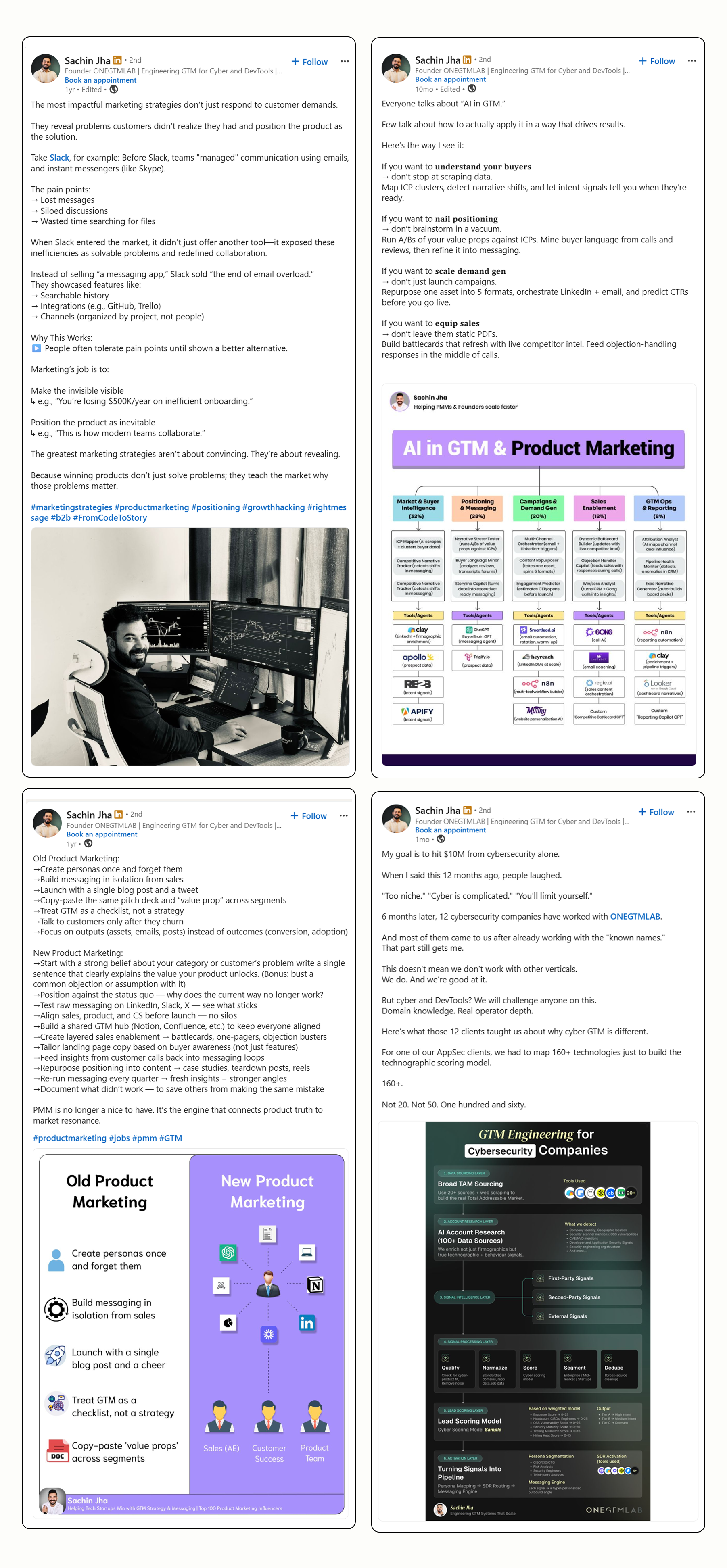
Everyone wants the highlight reel. Rarely anyone wants to sit through the eighteen-month rerun where nothing photogenic happens and you genuinely don’t know if it’s working.
I didn’t either, if I’m honest.
There were stretches where I’d post something I thought was good, get 40 likes, and wonder if I was just yelling into a well. There was no one that could tell me “keep going, this compound.” I just kept going because stopping felt worse.
After that ONEGTMLAB happened.
And Then The Plot Twist…
When Megha and I actually launched OGL, we never ran a single ad. Not one.
Our pipeline was 100% inbound.
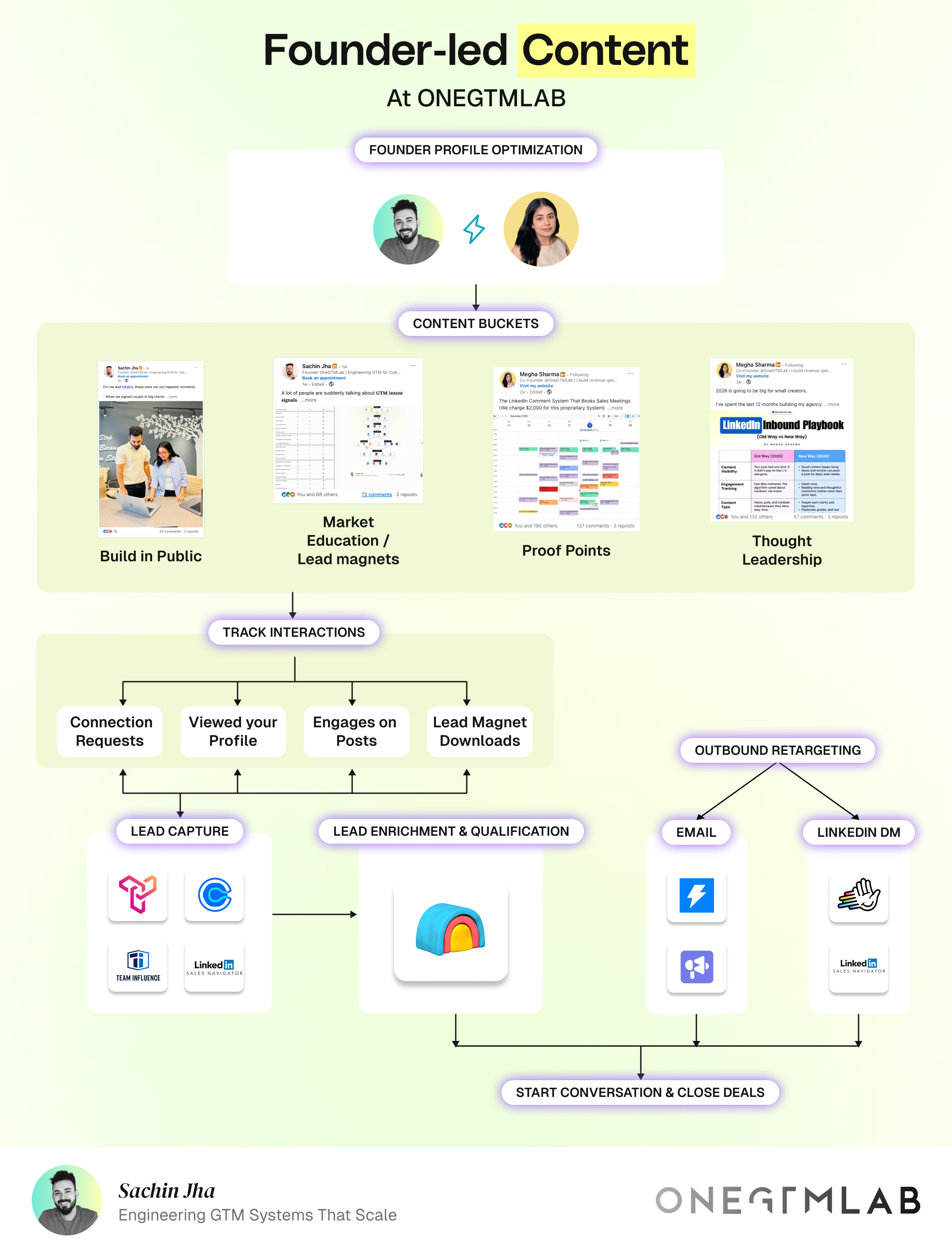
People who’d been reading me for a year sliding into my DMs going “hey, can you actually help me with this?” People who already trusted us before we’d sold them anything, because they’d been watching us think in public for months.
See! The part nobody tells you about distribution: it's not a marketing tactic you bolt on after launch, like a Shopify plugin you install in an afternoon. It's the foundation you pour before you build anything on top of it. You build the audience first. Then you build the company to serve the people who are already there, warm, curious, and asking you for help before you've asked them for anything.
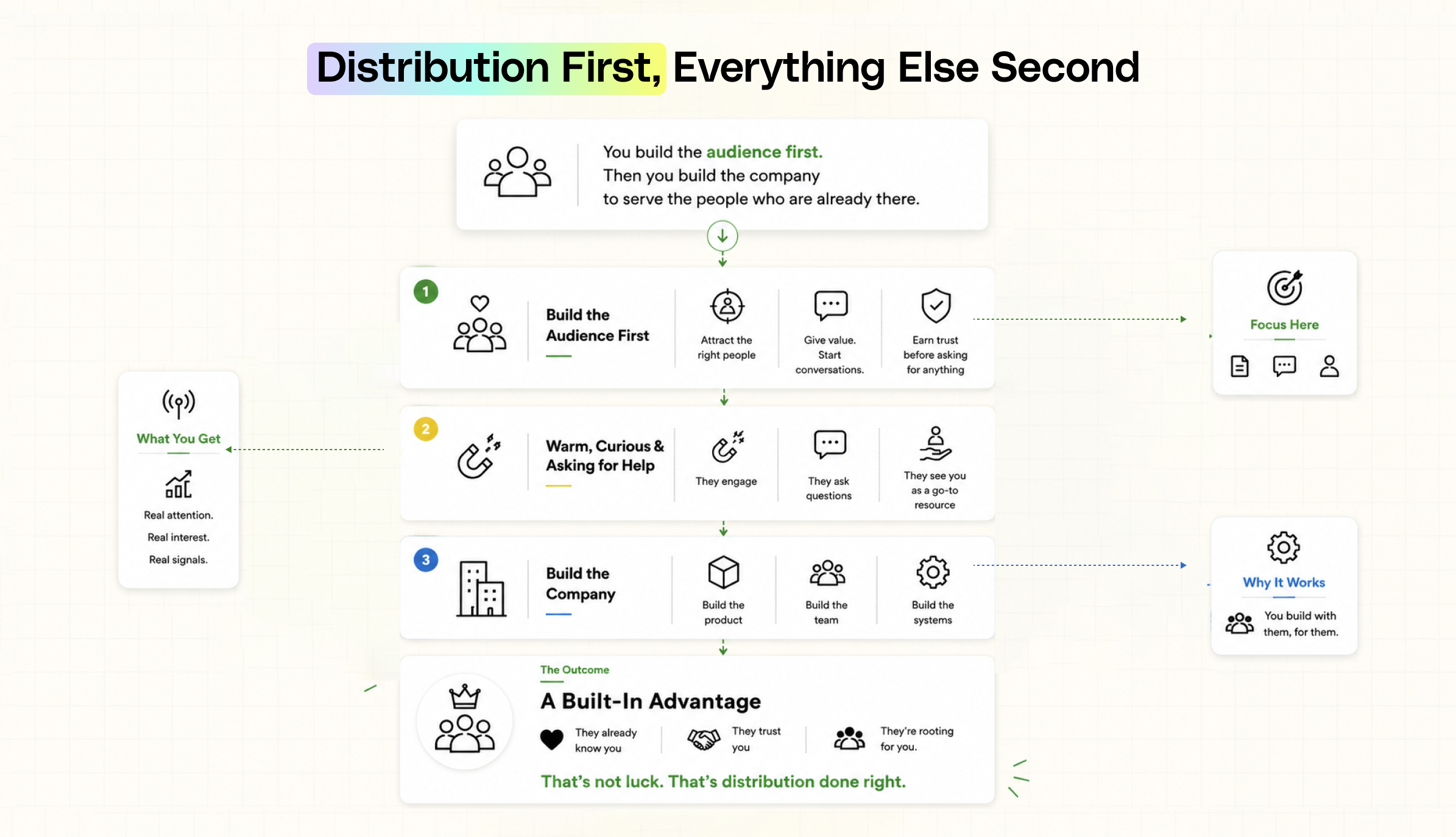
So, that’s what I DID, I just flipped the order everyone else does it in.
Built the attention before I built the thing the attention was supposed to sell. That’s it. That’s the whole secret, and I know it’s a little anticlimactic. Sorry not sorry.
- Get the order right, audience first > company second and six months looks like magic to everyone watching from the outside.
- Get it wrong, and you’ll spend years renting attention through ads, wondering why growth feels like pushing a boulder uphill in flip-flops, one dollar of spend at a time.
I didn’t go viral. I didn’t get lucky with one post that blew up. I just showed up on LinkedIn and said real things for 18 months before anyone was paying me to. Turns out that still works. Maybe it’s the only thing that ever really has.
If you’re building something right now and nobody’s watching yet, good. That’s exactly where this story starts too.