

I have watched teams spend weeks debating outbound copy when the real problem sat upstream. The sequence was fine. The timing was not.
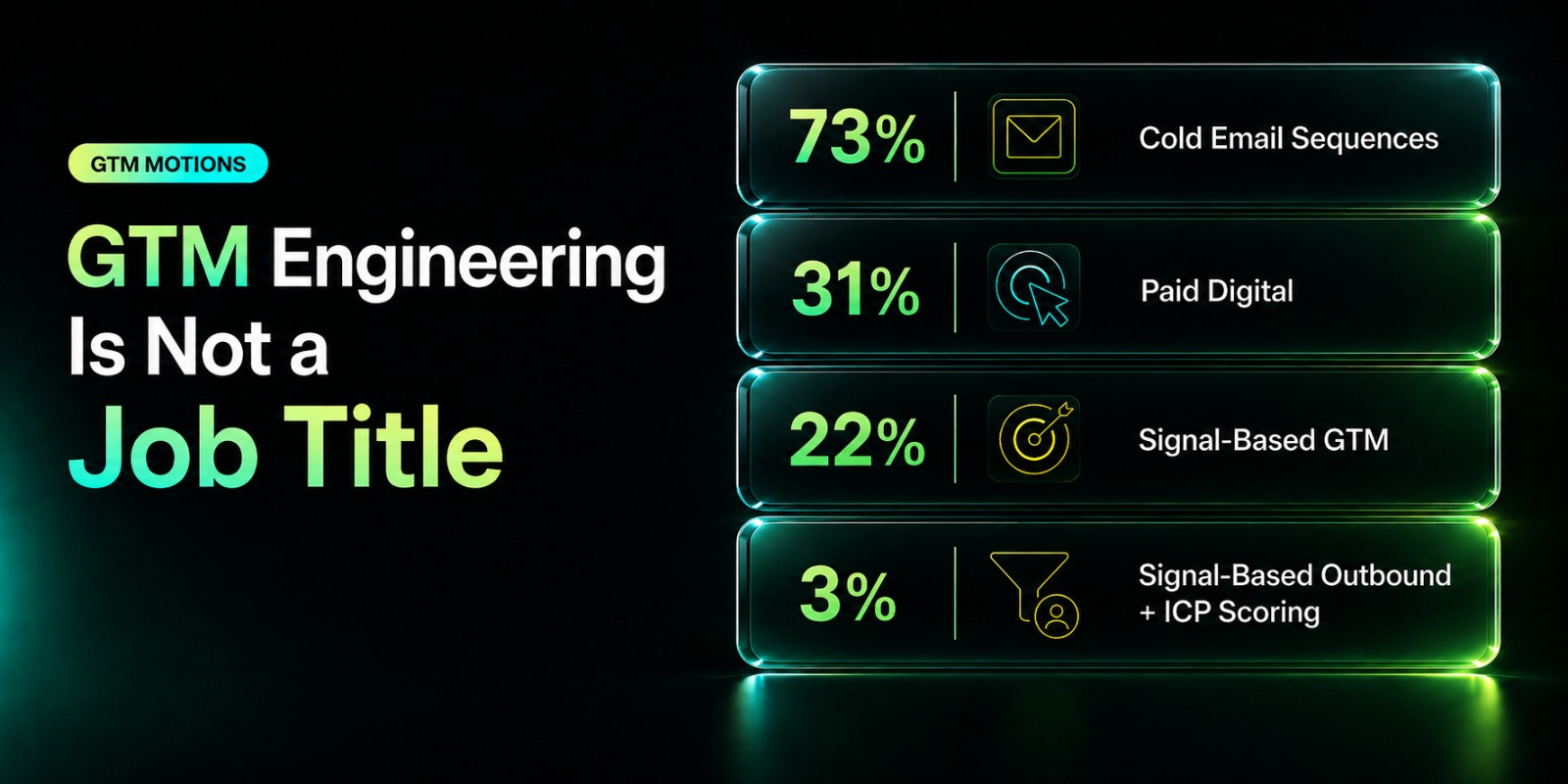
In our conversations with early-stage B2B SaaS teams, 73% ran cold email sequences and 22% were doing some form of signal-based GTM.
Only 3% of the teams we spoke to combined signal-based outbound with proper ICP scoring before sending.
That gap is why I keep coming back to one line. GTM engineering is not a job title, it is a survival skill.
This article covers what teams are doing today, what needs to change, and how to move from fit-based outbound to readiness-based GTM.
Now that the gap is on the table, it helps to see what those teams told us they are actually running.
What B2B SaaS GTM teams actually do
We asked early-stage B2B SaaS teams what their GTM actually looks like. These were conversations, not a formal market survey.
Every number here describes the teams we spoke to rather than the entire market. The value is a first-party view of what teams are running right now.
The pattern is clear. Activity is not missing.
Teams are using several channels at once, but the systems underneath them are less mature than the activity on top.
- 73% ran outbound email, primarily cold sequences.
- 61% used LinkedIn outreach, manually or through automation.
- 54% used content or inbound, including blogs and LinkedIn posts.
- 48% relied on referral or warm motions, often through founder networks.
- 31% used paid digital, including LinkedIn or Google ads.
- 22% used some form of signal-based GTM.
- 18% used community-led motions, such as Slack or Discord groups.
- 12% used PLG or self-serve motions in the pre-$5M ARR segment.
Teams could select more than one motion, so these percentages are not meant to add up to 100%.
They show the mix of activity, not mutually exclusive categories. The more important comparison sits inside the signal-based motion.
How to read the 22% and the 3% together
Twenty-two percent of the teams we spoke to were doing something they described as signal-based GTM.
A much smaller group had the readiness scoring discipline underneath it. Only 3% were running signal-based outbound with proper ICP scoring before sending.
Those figures point to two different levels of execution.
A team can capture a signal and still send before establishing whether the account is ready. Signal capture alone is not the same as an engineered GTM system.
Now that we have separated signal capture from readiness scoring, it is worth naming the discipline underneath both of them properly.
GTM engineering is a practice, not a seat on the org chart
I use GTM engineering to mean connecting signal capture, readiness scoring, triggering, messaging and positioning into one revenue system.
The important word is connecting.
You can hire a GTM engineer, buy the right software and still have five separate activities that never become a system.
That is why I resist the job-title reading. It turns a discipline into a person, then turns the person into the owner of a tool.
The work is broader. It is building the conditions for the right account to receive the right message at the right moment.
Before talking about what to build, it helps to name what teams need to stop normalising.
What the field needs to move away from
- Spray-and-pray cold email.
- LinkedIn outreach with zero context.
- Static ICPs built once and never updated.
- Campaigns that start with "let's try outbound."
- Tools treated as the strategy.
None of those failures is fixed by adding another dashboard or another automation.
The real shift is upstream, where teams decide what counts as a signal, how readiness is scored and what should happen next.
Now that we have covered what the field is moving away from, it is worth being just as specific about where it is going.
Where GTM engineering is heading
The field does not need another maturity model. It needs a direction of travel.
The shifts below come directly from the original post. Each one changes when, why or how a team reaches out.
Capture the signal before the sequence starts
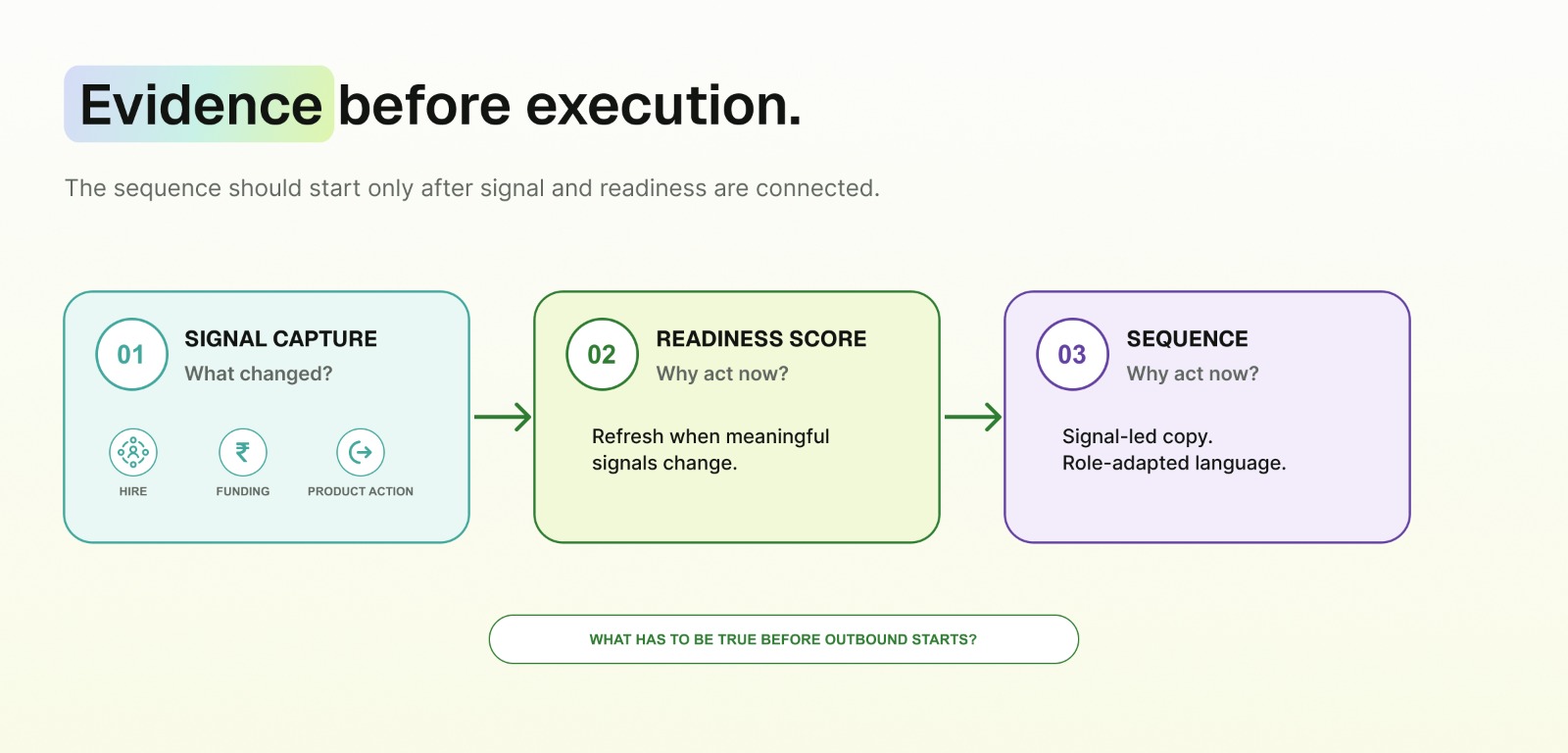
Traditional outbound starts with a list and a calendar. Signal-based outbound starts with evidence that something has changed.
A relevant hire, funding event, product action or technology change can create a reason to look again at an account.
The signal is only the beginning.
In our conversations, 22% of the teams we spoke to said they were running some form of signal-based GTM.
The response is not to collect every possible signal.
Define the few signals that genuinely change account priority, then route them into the system before a sequence begins.
What to do now
- Map your ICP to signals, not just job titles.
- Build the trigger into the CRM so reps know when to act, not only who to contact.
Our guide to 25 B2B buying signals offers a useful starting library. The important part here is making the trigger operational.
Once signals are in the system, the next question is how account fit should change as those signals arrive.
Make the ICP dynamic, not static
An ICP is useful when it helps a team decide. It becomes dangerous when it is treated as a document approved once and left untouched.
In our conversations, only 11% had a documented ICP before sending.
A documented ICP is still not the same thing as one that updates as evidence arrives.
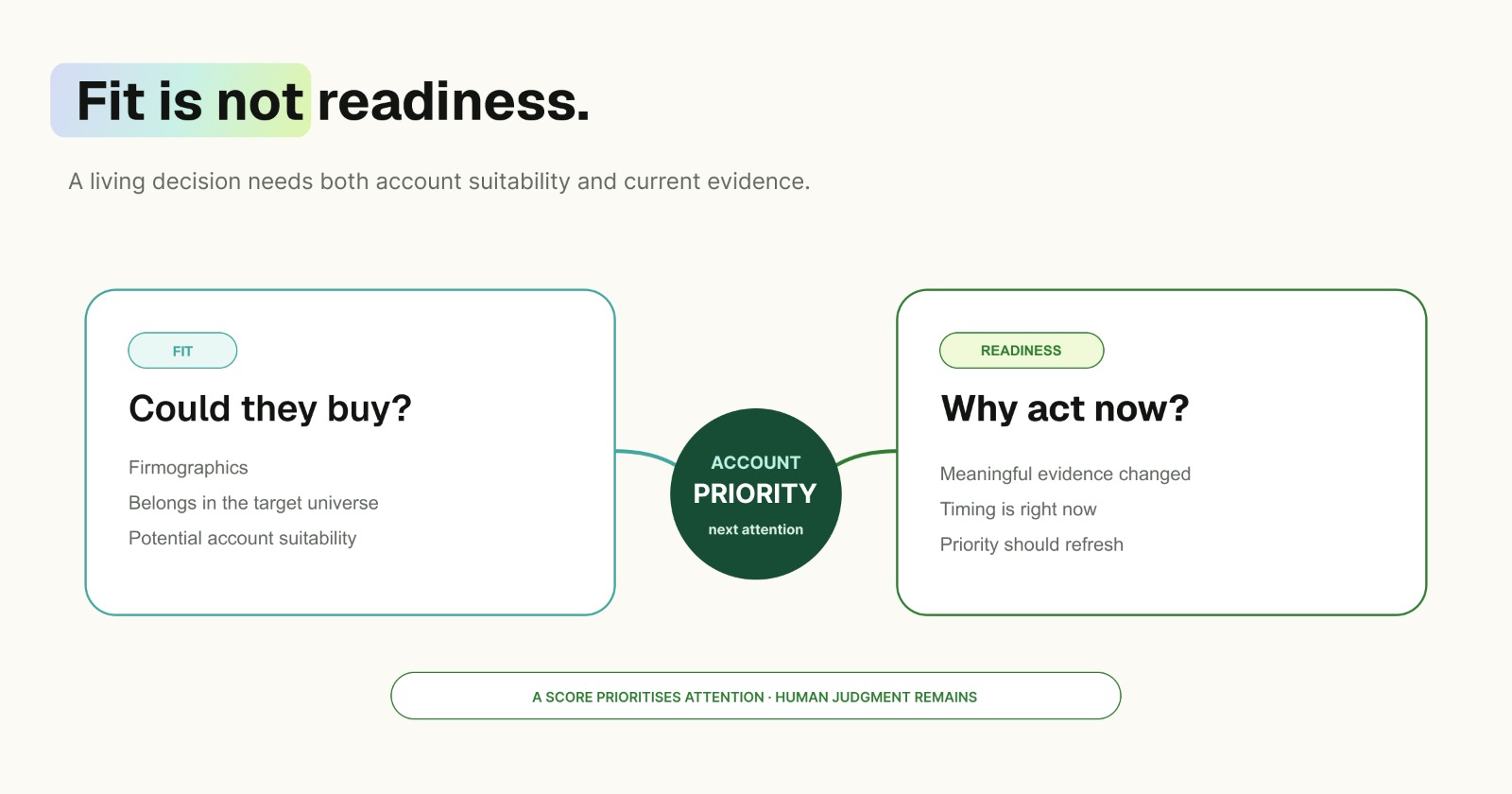
The shift is from fit as a fixed label to fit as one input in a living decision.
Firmographics tell you whether an account belongs in the universe. Readiness signals help tell you whether now is the moment to act.
What to do now
- Score accounts on readiness, not just fit.
- Refresh the score when meaningful signals change rather than waiting for a quarterly planning cycle.
Readiness scoring also needs humility. I wrote recently about an account we scored at 91 that went nowhere.
A score prioritises attention, it does not predict the future, so judgment still belongs with the human.
A score can prioritise the account. It still needs a reason for the outreach to exist.
Start with the buying trigger, not the persona
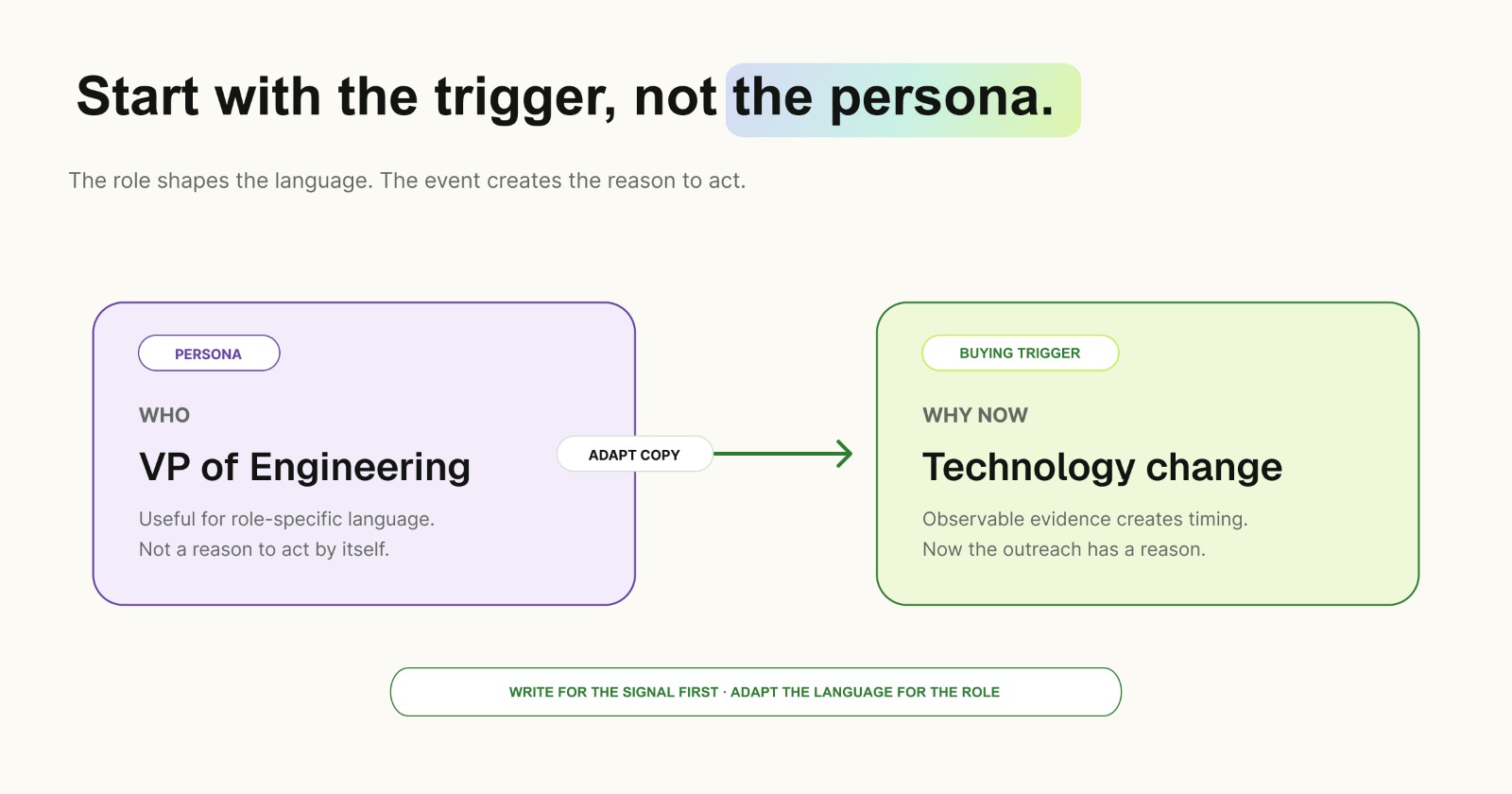
Personas explain who you are speaking to. Buying triggers explain why the conversation might matter now.
That distinction sounds small, but it changes the sequence from a role-based pitch into a response to a real event.
The data we collected did not measure trigger usage directly, so there is no percentage to force into this section.
If the same VP of Engineering could receive the same message in January, April and October, the message is probably based on persona fit rather than a reason to act.
What to do now
- Identify the event or condition that makes the outreach timely.
- Write the sequence around that trigger, then adapt the role-specific language around it.
Once the trigger becomes the entry point, context stops being decoration. It becomes the logic of the message.
Build context before you write the message
Cold outreach often fails before the first sentence is written.
The team has a list, a persona and a template, but no account-level reason for the message to exist.
That is how technically personalised outreach still feels generic.
Seventy-three percent of the teams we spoke to ran cold email sequences, while 61% used LinkedIn outreach.
Those numbers show heavy channel use, not message quality.
High-volume channels need more context underneath them if they are going to feel relevant.
What to do now
- Build context from product usage, intent and firmographic information where available.
- Write for the signal first, then for the persona.
This is also where content earns a different job. It can warm an account before a rep ever touches it.
Creating that context at scale is where AI helps, but only if it stays on the right side of the decision.
.jpeg)
Let AI enrich. Let humans judge.
AI is excellent at the repetitive work around a decision: finding information, enriching records, summarising context and preparing a first pass.
It is less useful when a team asks it to replace the decision itself. The system gets faster, but not necessarily wiser.
I have seen teams spend heavily on tools and still struggle to explain how those tools create pipeline.
In one case, a $60M cyber RevOps leader was spending $30,247 a month across 22 tools with zero pipeline coverage.
That is why "tools as the strategy" belongs on the away-from list. The stack is infrastructure, not the strategy.
What to do now
- Use automation and AI to collect, enrich and organise the evidence.
- Keep the final judgment about priority, message and next action with a human when the signal is ambiguous or high value.
Our intent-based LinkedIn outreach workflow shows how the tooling can connect end to end.
The boundary matters. The workflow is the machinery, while the strategy decides what evidence should make it move.
When the system does that well, outbound starts to feel less like interruption and more like timing.
.jpeg)
Make outbound feel warm
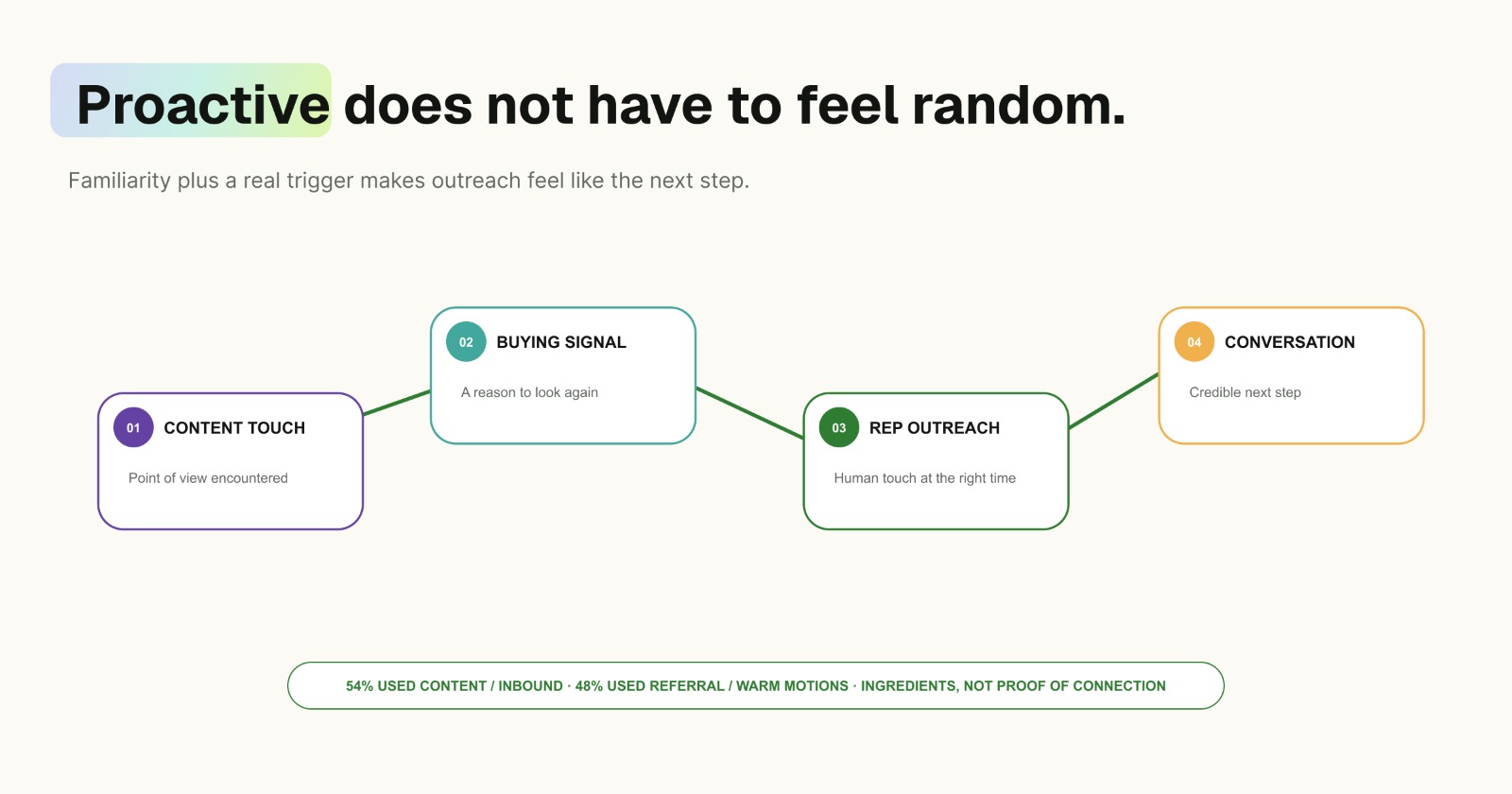
Warm outbound is what happens when the account has already encountered your point of view and the trigger is real.
The message reflects what is happening. The outreach can still be proactive without feeling random.
In our conversations, 54% of teams used content or inbound and 48% used referral or warm motions.
Those figures do not prove the channels are connected, but they show many teams already have ingredients that can make outbound warmer.
What to do now
- Let content warm priority accounts before the rep reaches out.
- Use the signal to decide when the human touch should happen.
When this works, the rep is not manufacturing relevance in the first line.
The system has already created enough familiarity and timing for a credible conversation.
But timing alone is not enough. The message still needs a point of view worth hearing.
Put product marketing inside the sequence
A sequence is a compressed expression of positioning, product truth, buyer context and the reason to care now.
When product marketing enters after the list, the readiness score and the automation are already set, the message becomes an afterthought.
The fix is to move PMM upstream.
Product marketing should help define which signals matter, what each signal means, which proof points belong with it and how value changes by context.
What to do now
- Bring PMM into signal definition and sequence design, not only copy review.
- Measure pipeline by signal source as well as channel so the team can learn which reasons to act actually create revenue.
Our AI Agents vs. AI Automation piece makes the same operating point. Automation amplifies the logic you give it.
If the positioning underneath the workflow is weak, faster execution spreads the weakness faster.
That is why the messaging layer belongs inside GTM engineering.
Now that all seven shifts are on the table, the practical question is which one a team should change first.
.jpeg)
What teams should do now
The good news is that none of these shifts requires a new department.
A small team can start by changing the order of operations. Put signal and readiness before sequence, then let the tools support that order rather than define it.
The practical checklist from here is deliberately simple.
- Map your ICP to signals, not just job titles.
- Score accounts on readiness, not just fit.
- Build triggers into your CRM so reps know when, not just who.
- Write sequences for the signal, not the persona.
- Let content warm accounts before a rep ever touches them.
- Measure pipeline by signal source, not just channel.
Start with the first broken handoff.
If a signal is captured but nobody acts, fix routing. If accounts are scored but messaging stays generic, fix sequence logic.
The metric is not more activity. It is better timing.
For 97% of the teams we spoke to, the sequence starts before proper ICP scoring is in place.
That does not mean every one of those teams is doing bad outbound.
It means only 3% had both signal-based outbound and proper ICP scoring before sending, which is a very different level of operating discipline.
The teams winning in 2026 are not running better cold email.
They know exactly who is in-market before they reach out. That is the gap, and it is widening.
.jpeg)
Now that the shifts and the checklist are covered, a few practical questions still come up often enough to answer directly.
If your outbound still starts with a list, ONEGTMLAB can help build the signal capture, readiness scoring and execution layer underneath it. Let's talk.