

Everyone copies the top of the pyramid. Then wonders why the bottom gives out.
The GTM you see on LinkedIn is growth loops, community, PLG, moats, RevOps. That is the part everyone sees. It is also the part that took three years and a foundation to earn.
If you are early-stage and your outbound is not landing, the problem is probably not the copy and not the tool. There is nothing under it for the message to land on.
So here is the reframe, and it carries the whole argument.
GTM is not outbound. Outbound is one tactic, on one channel, on one layer. GTM is the whole system that moves a product to the people who actually need it.
Nobody posts about the bottom, so let me say the quiet part. This is the pyramid I published on LinkedIn, written out properly. We also told the same story from the inside when our own agency hit $1M ARR in six months and it took us eighteen months to deserve it.
5 Layers of GTM Breakdown
The pyramid has five layers. You build them from the bottom, in order, and both your effort and your spend rise as you climb.
One point of clarification before we start, because we publish two five-part models and they are not the same thing. The 5 Stages of GTM Maturity describe how a GTM motion matures once you have one. The five layers below describe what has to exist before that motion has anything to stand on.
Here is the whole model in one place:
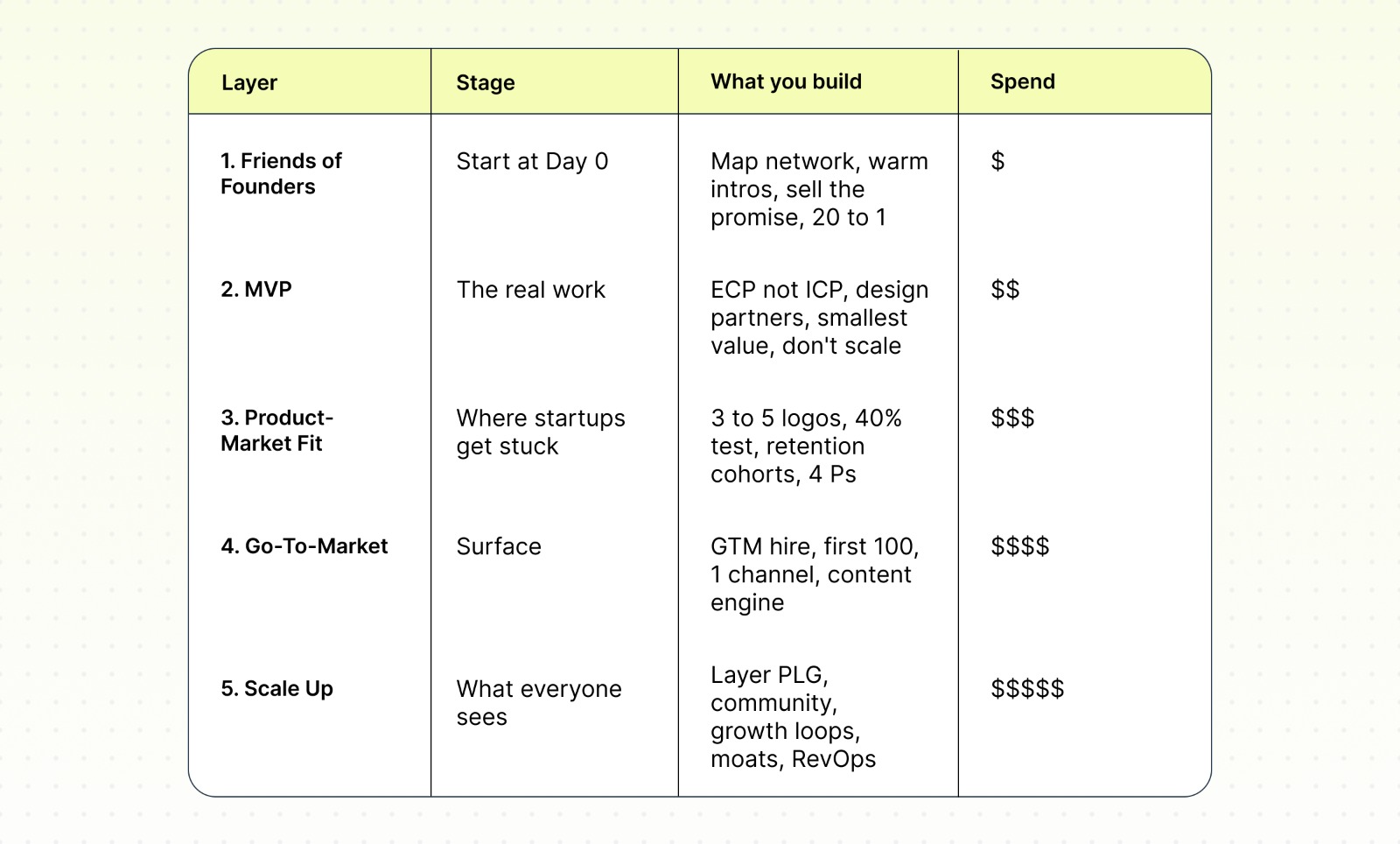
Read that table bottom-up and the sequence does something useful. It tells you where you actually are, which is almost never where you were planning to spend.
Layer 1 · Friends of Founders, Start at Day 0
Your first customers come from people who already trust you, not from a channel.
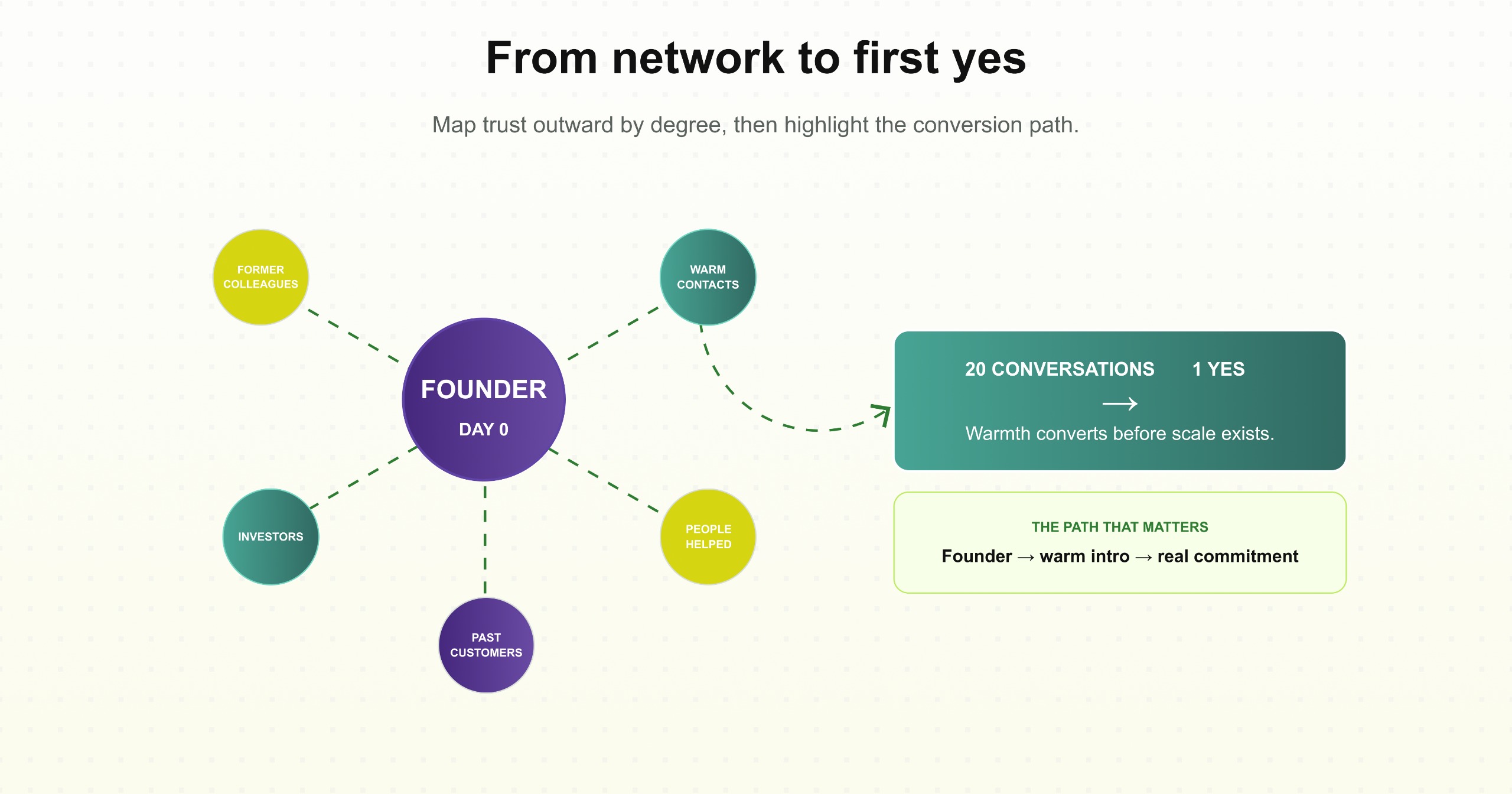
This layer has no tooling and no dashboard. You are working your existing network, in person and one at a time, before there is a product worth demoing. The output is not pipeline. The output is a small number of people who said yes to you personally.
The reason this is Layer 1 and not a footnote is that trust is the only asset you have at Day 0. You cannot buy it, automate it, or sequence your way into it.
What you actually do
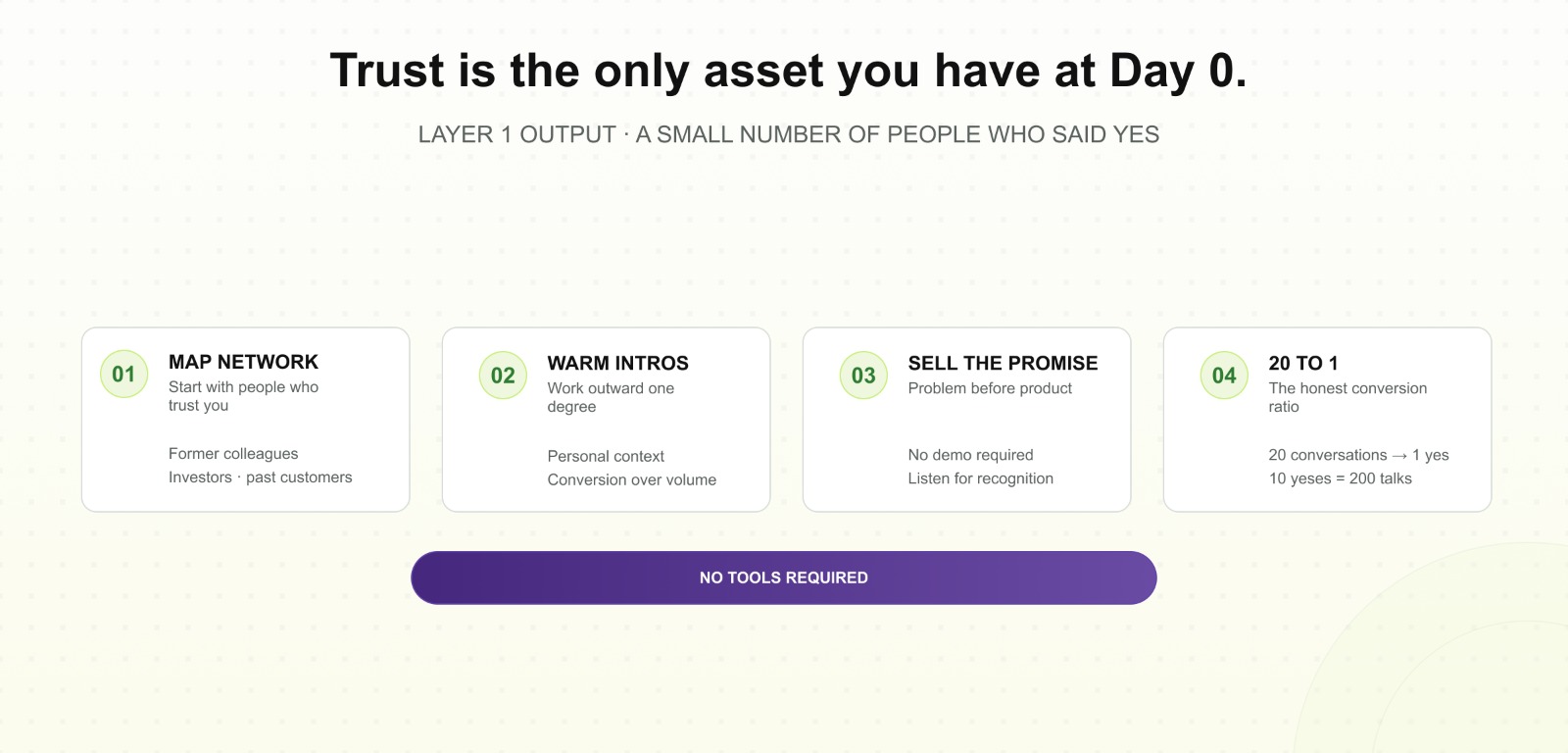
How the four moves work together
- Map your network. Write down every person who would take your call. Former colleagues, investors, customers from a previous company, people you have helped. This is a list-building exercise, and the list already exists in your phone.
- Ask for warm intros. Work outward from that map, one degree at a time. A warm intro converts at a rate cold outbound cannot approach, and at this stage you need conversion far more than you need volume.
- Sell the promise before the product is even real. You are not demoing. You are describing the problem well enough that someone recognises their own situation in it. If they lean in before the product exists, the problem is real.
- Turn 20 conversations into 1 yes. That ratio is the honest one, and it is worth internalising early. Twenty conversations to one commitment sounds brutal until you realise that ten yeses means two hundred conversations, which is a founder's Q1 rather than an impossible number.
That is not a growth hack. That is the floor everything else stands on.
Once you have those first believers, they are the people you build for.
Layer 2 · MVP, The Real Work
You build the smallest thing that solves a real problem for your earliest customer, not your dream customer.
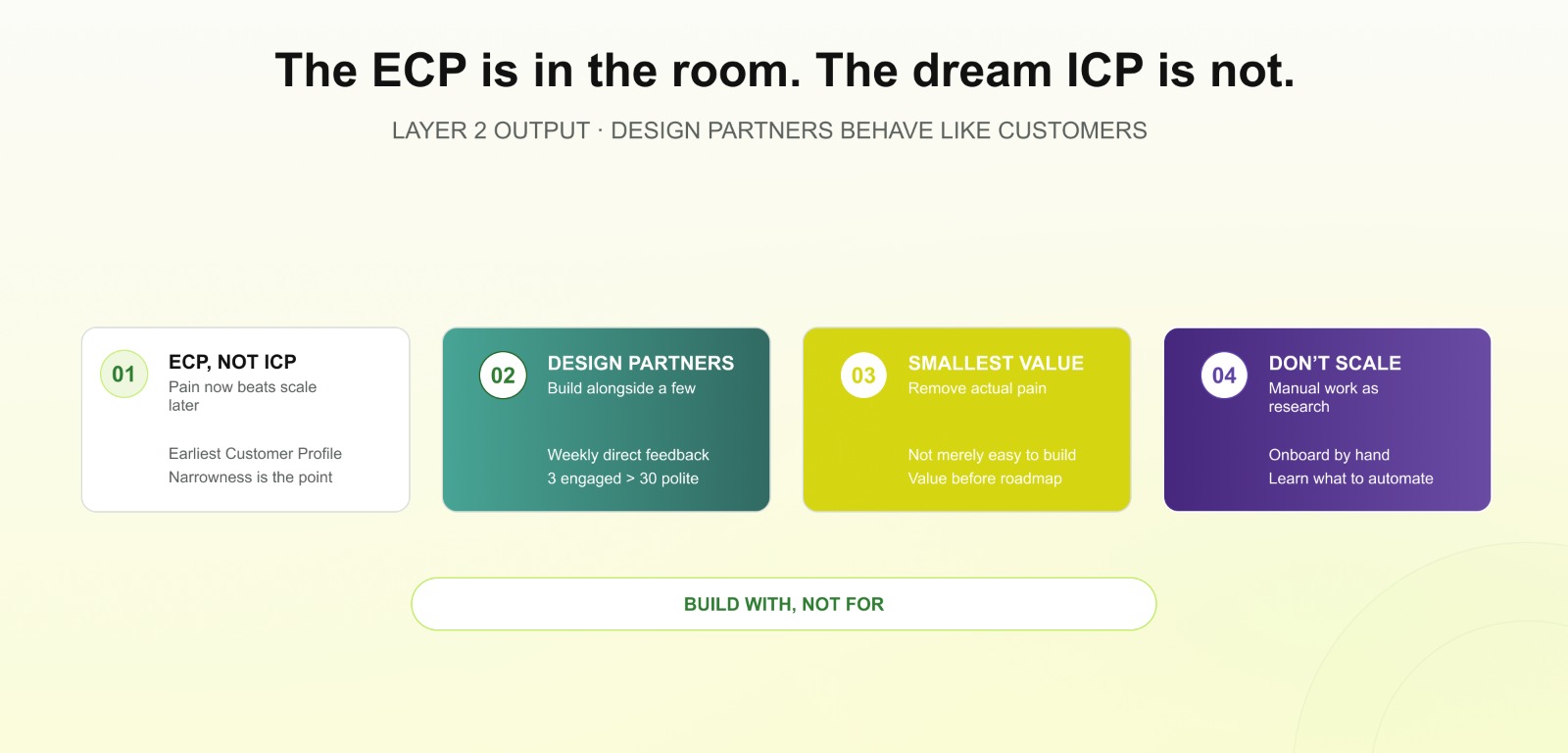
ECP stands for Earliest Customer Profile. It is the description of the person who has the problem badly enough to tolerate an unfinished product, which is a different person from your Ideal Customer Profile. ICP is who you will sell to at scale, and we define it properly in the ABM workflow post. ECP is who you build with right now.
Confusing the two is the most common Layer 2 mistake. Building for your dream ICP means building for someone who is not in the room and will not give you feedback.
This is the real work. It is also the part with no dashboard, which is why it gets skipped.
What you actually do
How the four moves work together
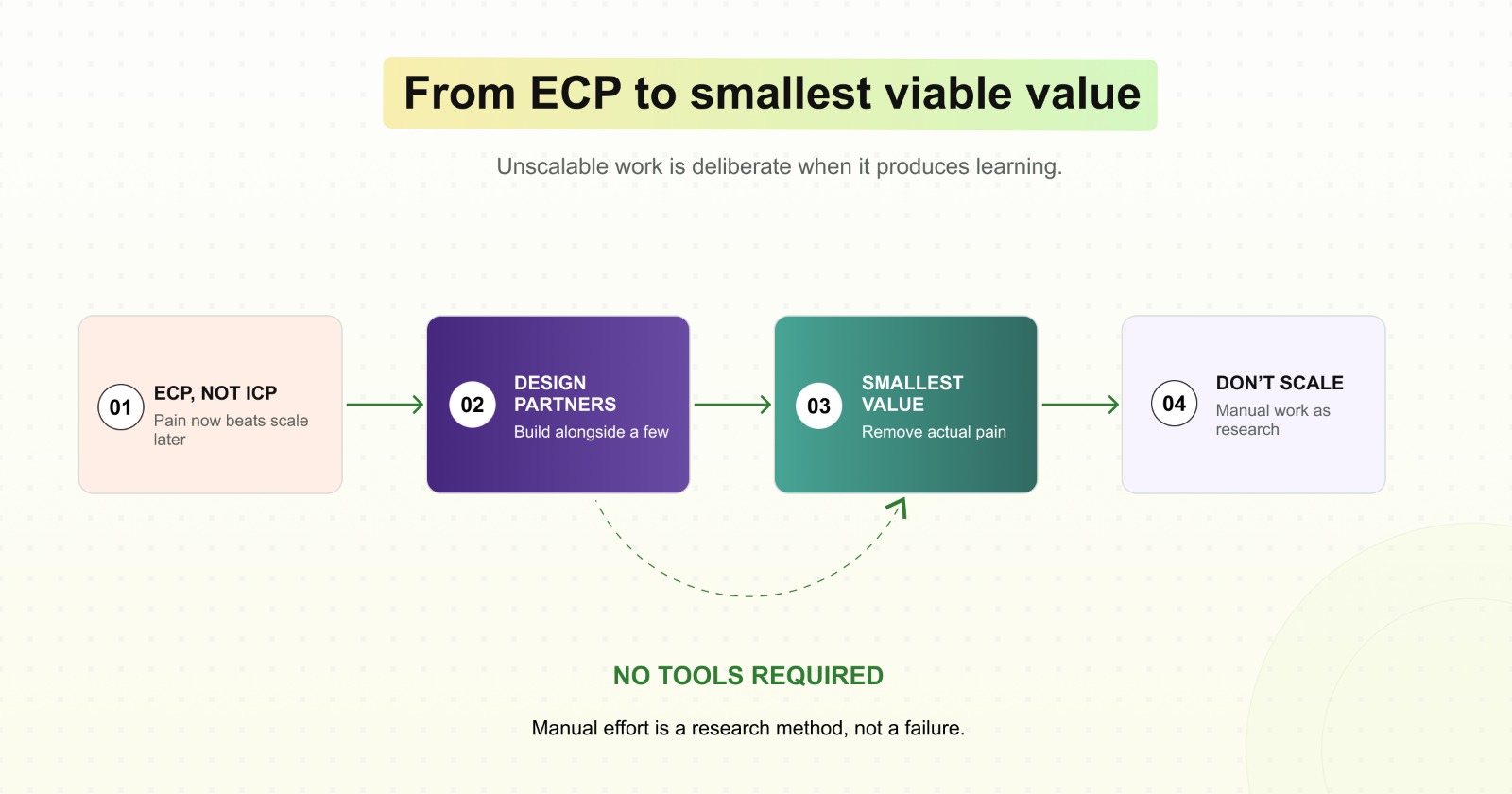
- Build for your ECP, not your ICP. Pick the customer who is in pain now. Their requirements will be narrower and more specific than your roadmap, and that narrowness is the point.
- Find design partners. A handful of customers who will build alongside you, give unflattering feedback weekly, and tolerate things breaking. Three engaged design partners beat thirty polite pilots.
- Ship the smallest thing that solves a real problem. Not the smallest thing you can build. The smallest thing that removes actual pain. Those are different, and founders consistently ship the first one.
- Do things that don't scale, on purpose. This is Paul Graham's advice from his 2013 Y Combinator essay, and it holds. Onboard customers by hand. Do the work manually behind the product. Unscalable work at Layer 2 is how you learn what to automate at Layer 4.
The word "purpose" is doing real work in that last point. Manual effort at this layer is a research method, not a shortcut you failed to avoid.
When those design partners start behaving like customers rather than favours, you are looking at Layer 3.
Layer 3 · Product-Market Fit, Where Startups Get Stuck
Product-market fit is evidence that a specific group of people would be upset if your product disappeared.
This is the layer the pyramid marks as where startups still are, and if you recognise yourself here, you are in the majority rather than behind. The trap is not being at Layer 3. The trap is what founders do when they get impatient at Layer 3.
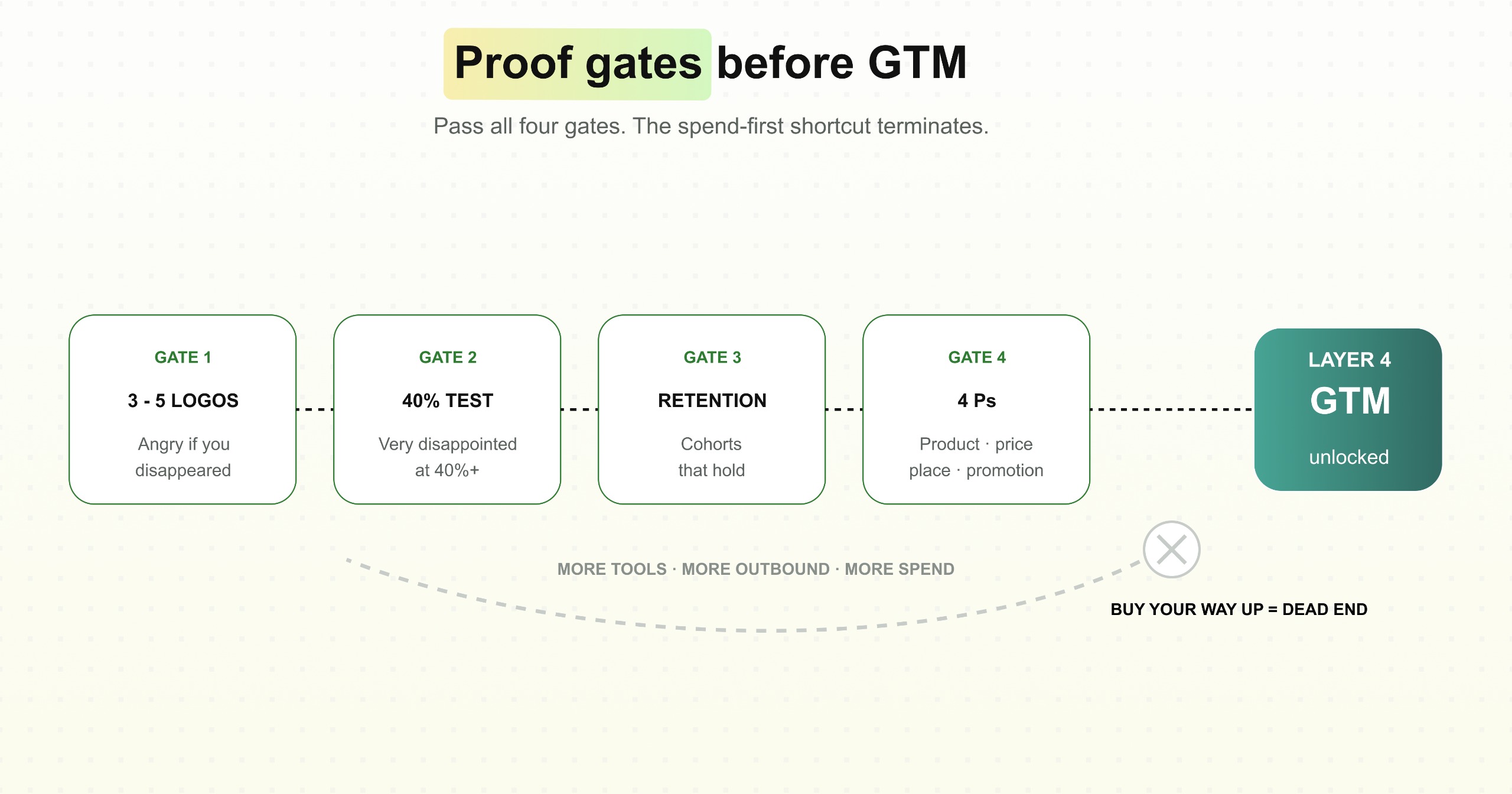
Instead of fixing the foundation, they try to buy their way up. More tools. More outbound. More spend.
More of nothing is still nothing. We documented $30,247 a month across 22 tools with zero pipeline coverage, and the diagnosis was never the tools.
What you actually do
How the four moves work together
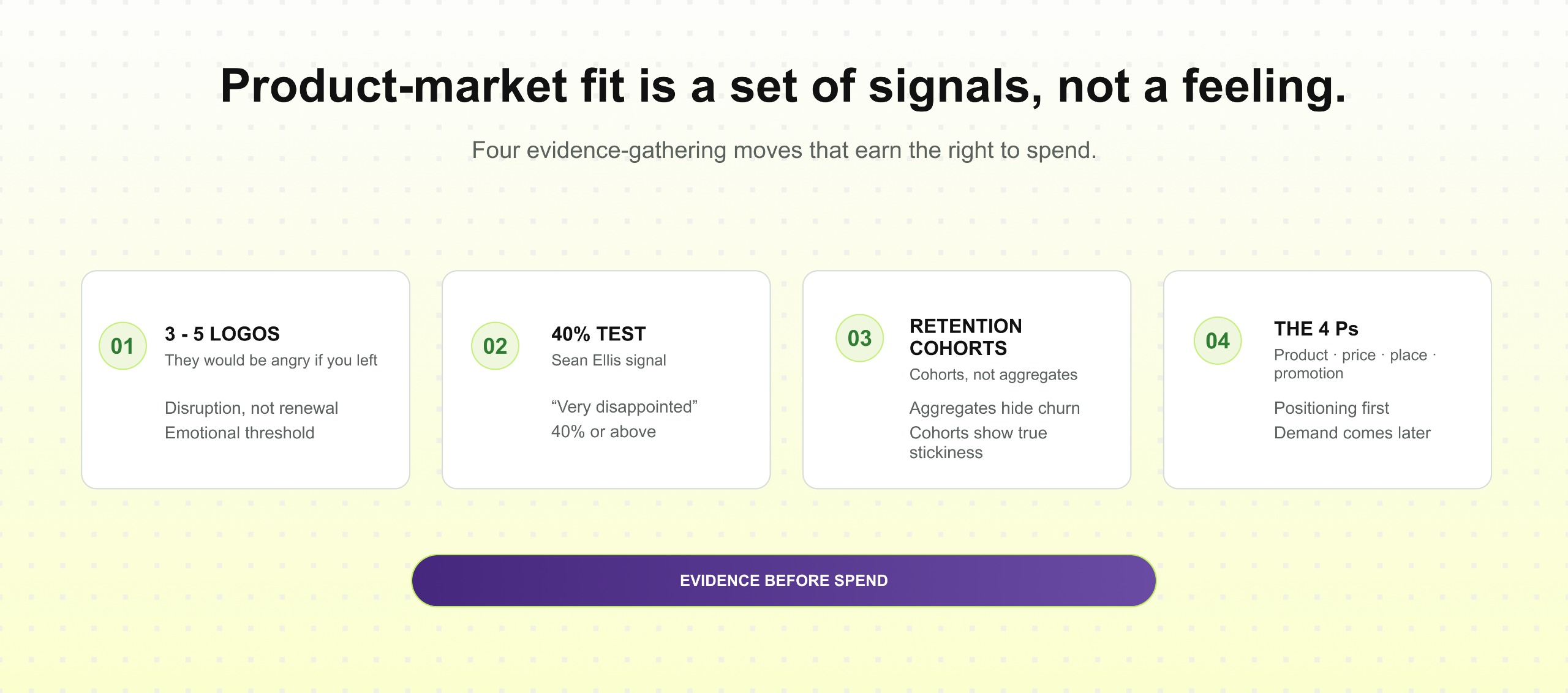
- Get 3 to 5 logos who would be angry if you disappeared. Not five logos who renewed. Five who would be genuinely disrupted. That emotional threshold is a better signal than any revenue number at this stage.
- Run the Sean Ellis 40% test. Ask your users how they would feel if they could no longer use the product. If 40% or more say "very disappointed", you have a real signal. Below that, keep working the product rather than the funnel.
- Check retention that actually holds. Look at cohorts, not aggregates. Aggregate retention hides churn behind new signups, and cohort retention is the only view that tells you whether the product is sticking.
- Get the 4 Ps straight. The marketing mix, from E. Jerome McCarthy in 1960: product, price, place, promotion. Unglamorous and still load-bearing. Positioning problems at Layer 3 masquerade as demand problems at Layer 4.
Notice that none of those four moves is a marketing activity. All four are evidence-gathering, and the evidence is what earns you the right to spend.
Clear those and the top of the pyramid opens up, which is where tools finally enter the story.
Layer 4 · Go-To-Market, Surface
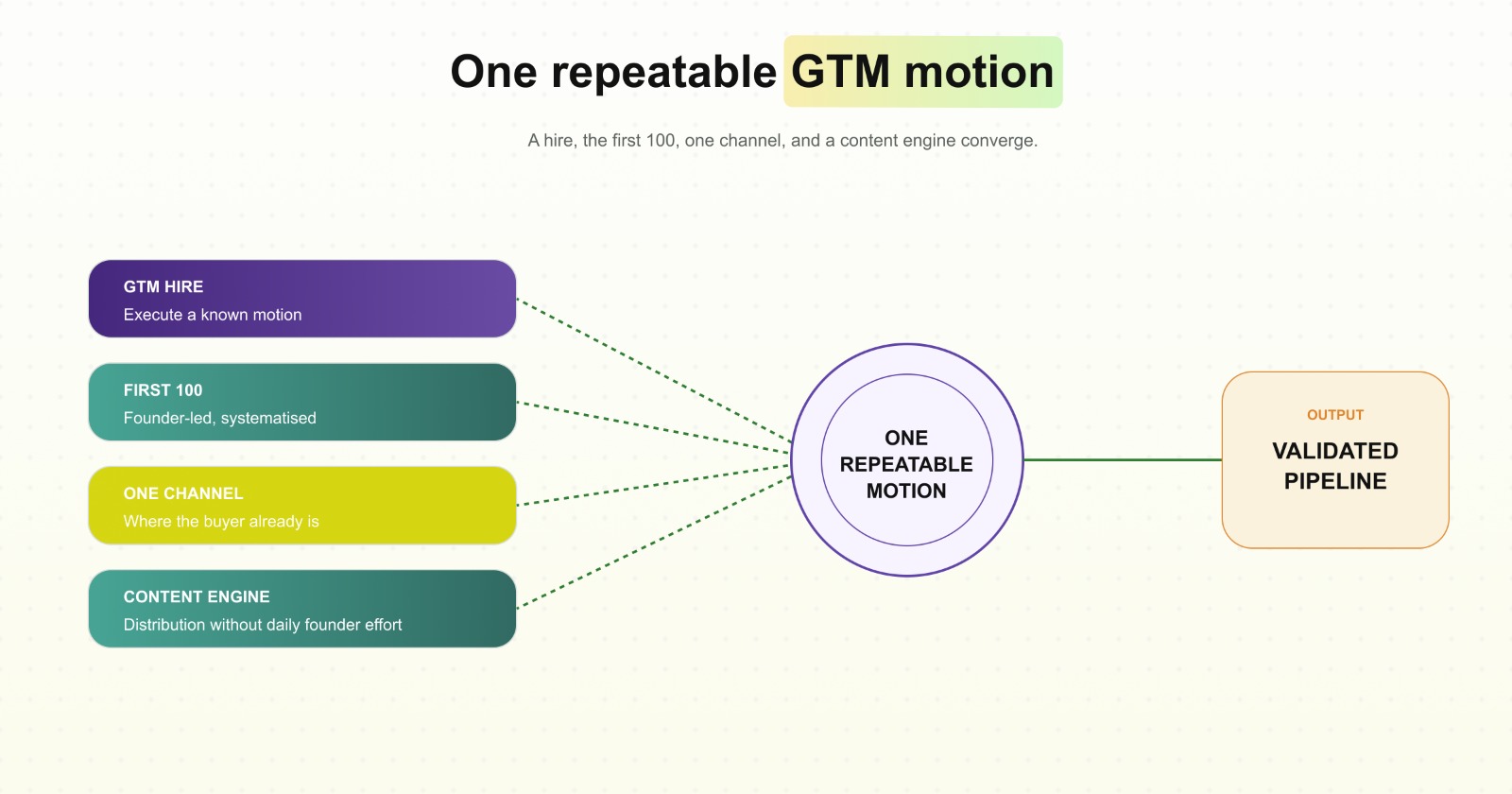
This is where you turn a validated product into a repeatable motion, with a hire, a channel, and a content engine.
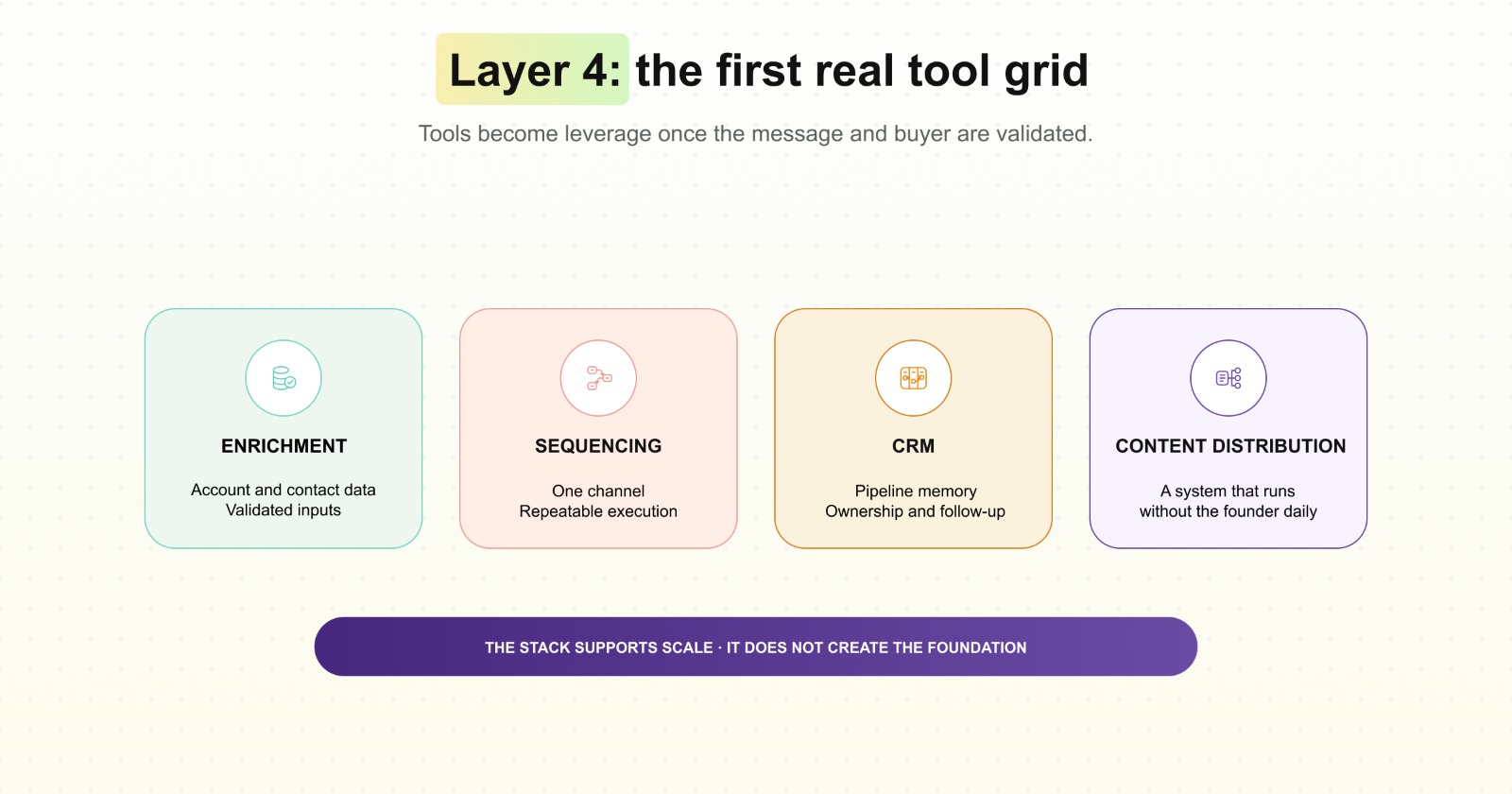
Layer 4 is the first layer where tools belong, and that is not an accident of page design. Three layers of this article had no tool grid because there was nothing for a tool to do. The moment there is a validated message and a validated buyer, tooling becomes leverage rather than decoration.
Here is the part I should say plainly, because a GTM agency arguing that GTM is not outbound invites an obvious question.
Nearly everything else ONEGTMLAB publishes is a Layer 4 deep dive. The ABM workflow, intent-based outreach, the content distribution system, the tooling comparisons. All of it is real, and all of it only works once Layers 1 to 3 exist. This piece is the map. Those pieces are the territory.
Tools that you should use
How they work together
- The GTM hire. Your first GTM hire inherits the message you validated at Layer 3, so hire for execution against a known motion rather than for someone to invent one. GTM also tends to fail in the seams between teams rather than inside them, which we covered in nobody really knows GTM.
- The first 100. Your first hundred customers are still substantially founder-led, just systematised. This is where warm intros become a repeatable sourcing motion instead of a personal favour.
- One channel. One. Pick the channel where your buyer already is, and make it work before adding a second. Our intent-based LinkedIn outreach workflow is one channel done properly, and it is the clearest illustration that outbound is a single tactic on a single layer.
- The content engine. Distribution that runs without you in it every day. We wrote the automated LinkedIn content distribution system as exactly that build.
This section is shorter than the three below it, and deliberately so. A piece that spent as many words on Layer 4 as on Layer 1 would be arguing the opposite of its own thesis.
Layer 5 gets shorter still, for the same reason.
Layer 5 · Scale Up, What Everyone Sees
Scale Up is where growth compounds without the founder in every loop, and it is the only layer most people ever write about.
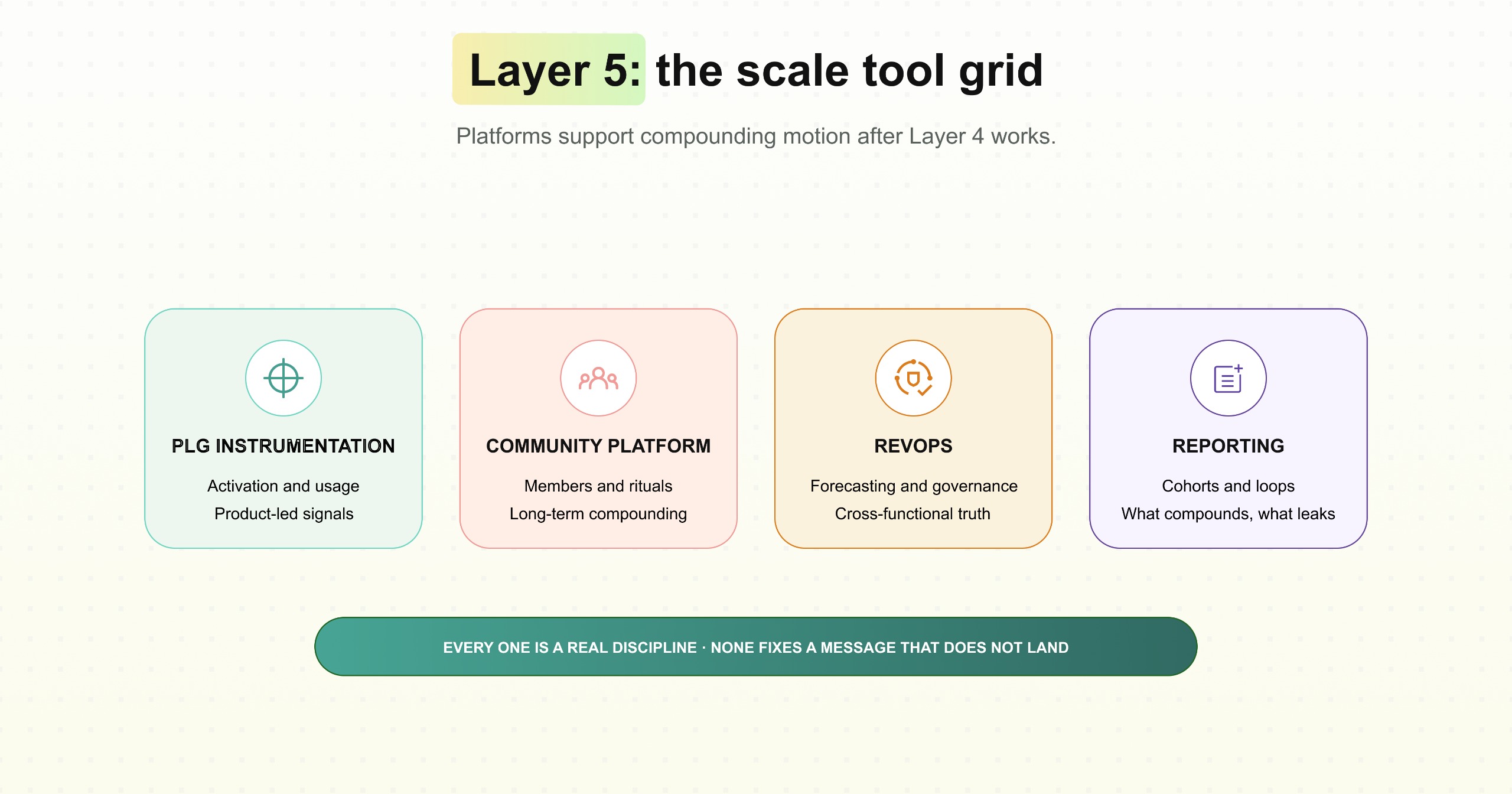
Five moves here rather than four, because this layer is genuinely broader than the ones below it. It is also the layer that took three years and a foundation to earn, which is why copying it first does not work.
Tools that you should use
How they work together
- Layer PLG on top. Product-led growth layered onto a sales motion that already works. Layered, not substituted.
- Build community. Community compounds slowly and cannot be bought, which is why it belongs at the top rather than in a launch plan.
- Build growth loops. Mechanisms where usage generates the next user. Loops need volume to function, and volume is what Layer 4 produced.
- Build moats. Data, integrations, switching costs, category ownership. Defensibility is built after you have something worth defending.
- Build RevOps. The reporting, forecasting, and governance layer that keeps the rest honest at scale.
Every one of those five is a real discipline. None of them fixes a message that does not land, and that is the whole reason this pyramid is drawn in this order.
Which brings us to the two arrows running up the sides of the graphic.
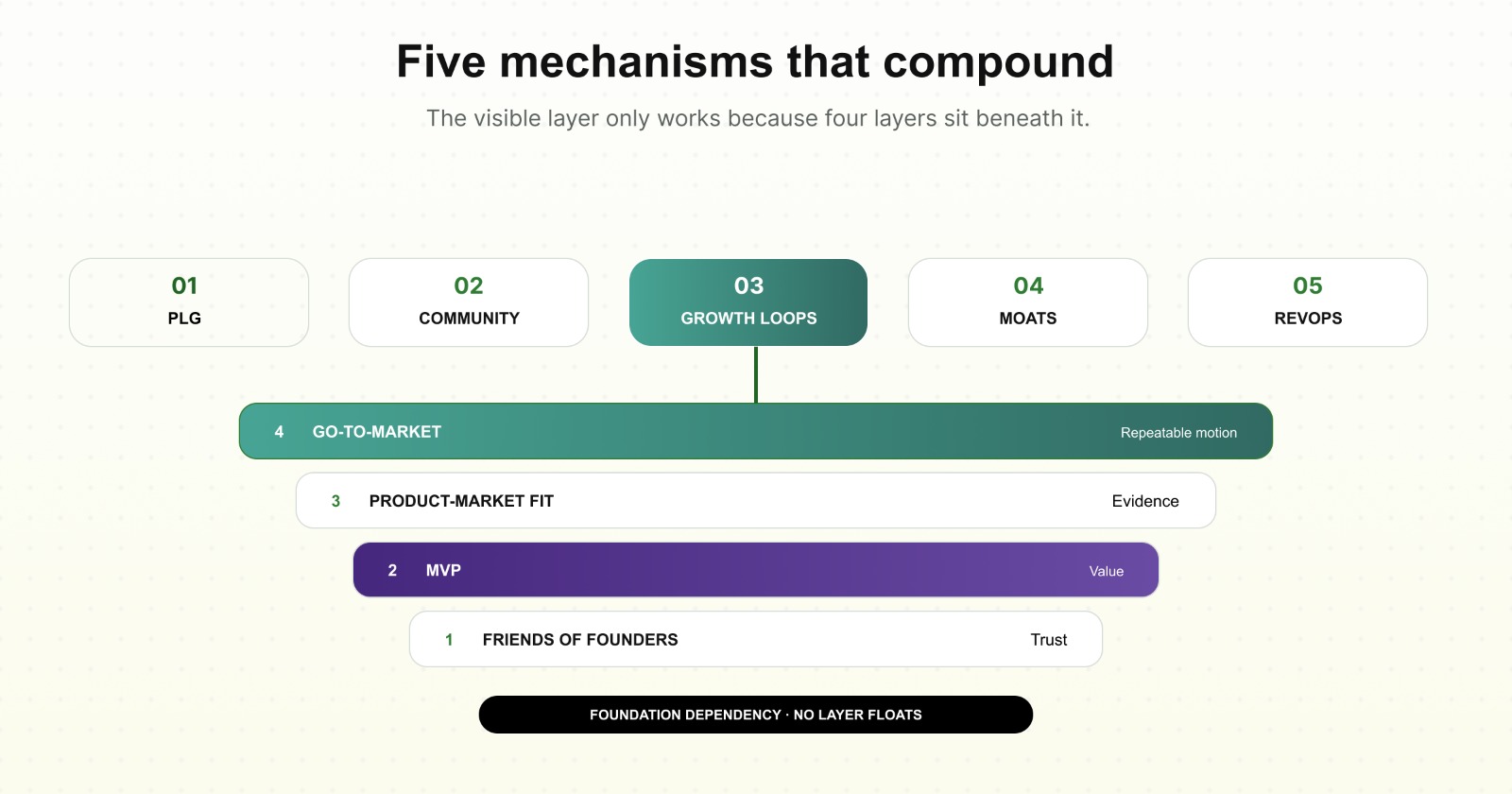
The Effort and Spend Curves
Two labels run up the sides of the pyramid. Effort on the left, spending on the right. Both rise as you climb, and that is the part that stings.
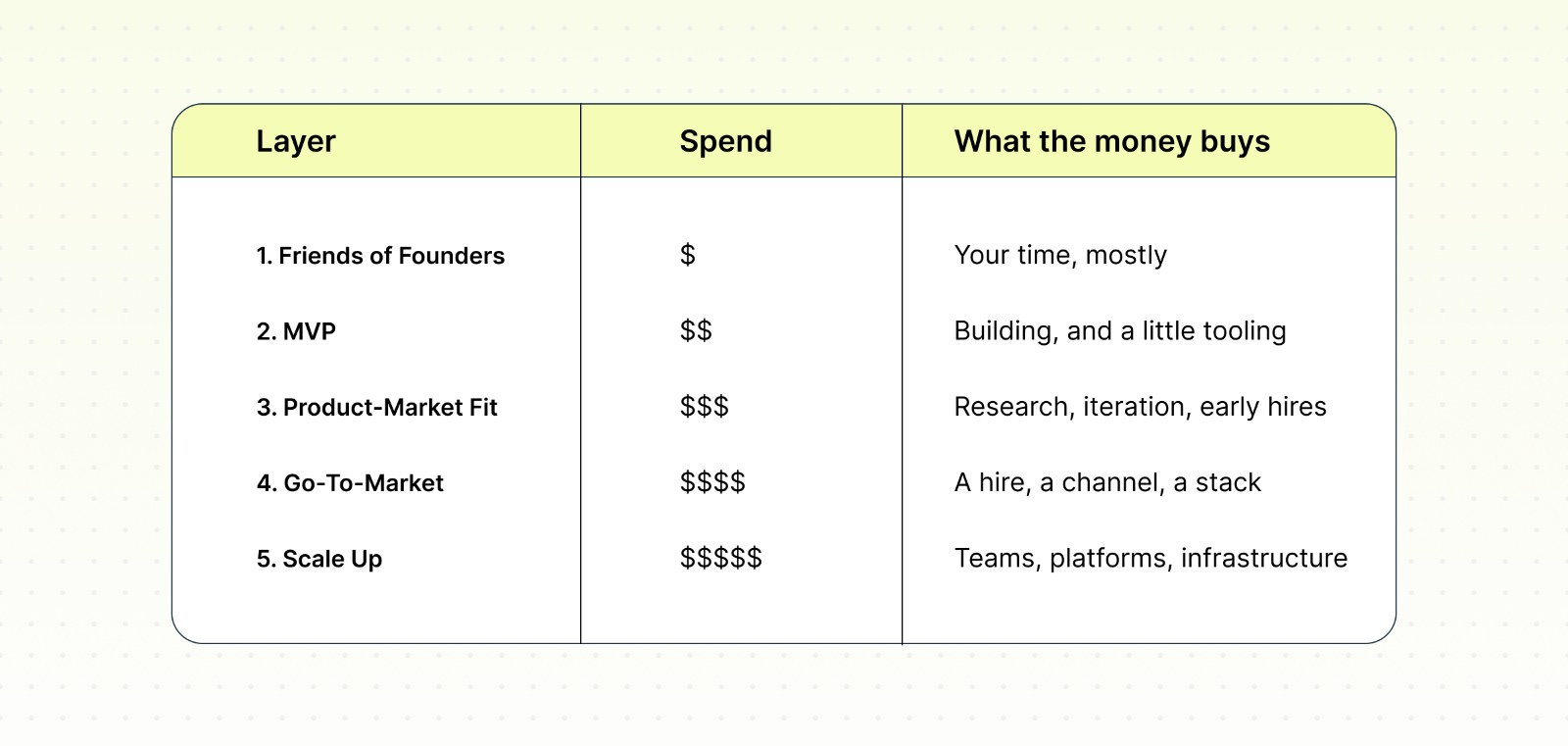
Skip the bottom and you are still spending at the top. The invoice arrives either way, and the return does not.
That is why the outbound is not working. It is not the copy. It is not the tool. There is no foundation for it to land on.
None of this is an argument against spending. Spend is how Layers 4 and 5 get built, and on the tooling question specifically we compared legacy GTM tools, AI-native tools, and Claude on cost and trade-offs. The argument is narrower than that: spend without foundation buys nothing.
GTM is not a growth team you hire. It is not a channel you switch on. It is not magic that kicks in after the round closes.
A few questions come up every time I share this model.