
GTM Engineering

We Don’t Say Yes To Every Client

Sachin Jha
7 mins
Last Updated on
August 13, 2026
Table of content
COMMUNITY
Join the ONEGTM CLUB
500+ GTM leaders and operators discussing what's actually working — in real time.
About the author
Sachin Jha
Founder & CEO, ONEGTMLAB | Engineering GTM for Technical Founders
Sachin has built GTM systems for 47+ technical founders across cybersecurity, DevOps, and developer infrastructure. He writes about GTM Engineering, AI-powered outbound, and what it actually takes to build a predictable pipeline at early-stage B2B SaaS companies.

A field guide to the 7 red flags I used to ignore, and what each one cost me.

Every consultant has a client story that still makes them wince. Mine usually start the same way. A great first call. A founder who "gets it." A deal that closes fast because nobody pushed back.

That speed should have been the warning.

So, here’s who I don't take anymore, and why I learned it the expensive way.
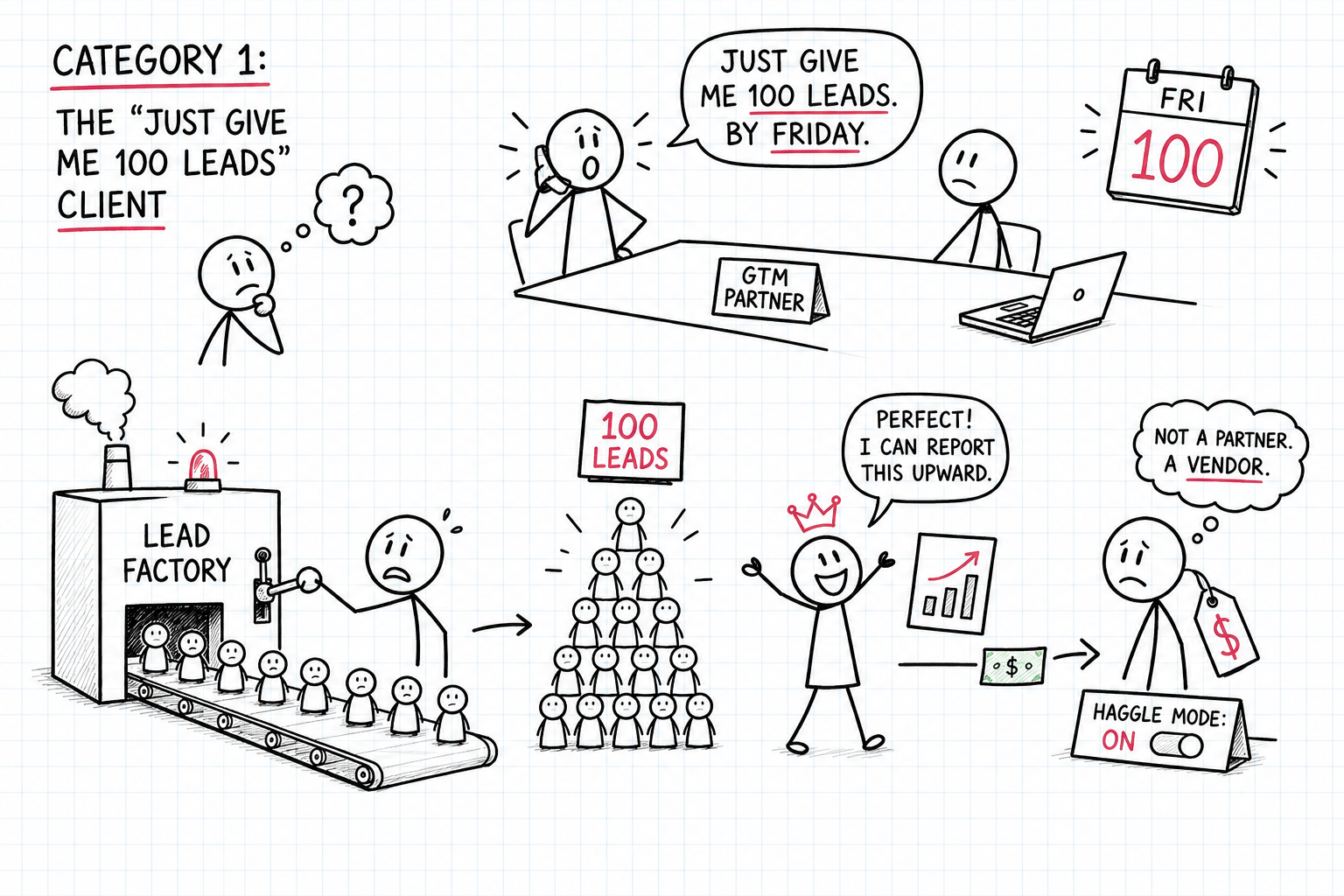
Category 1: The "Just give me 100 leads" Client

They don't want a system. They want a number by Friday.

I once onboarded someone who didn't want pipeline. He wanted a headcount he could report upward. The moment you agree to a lead number, you've stopped being a GTM partner and become a vendor he'll haggle with every month. And he will haggle.
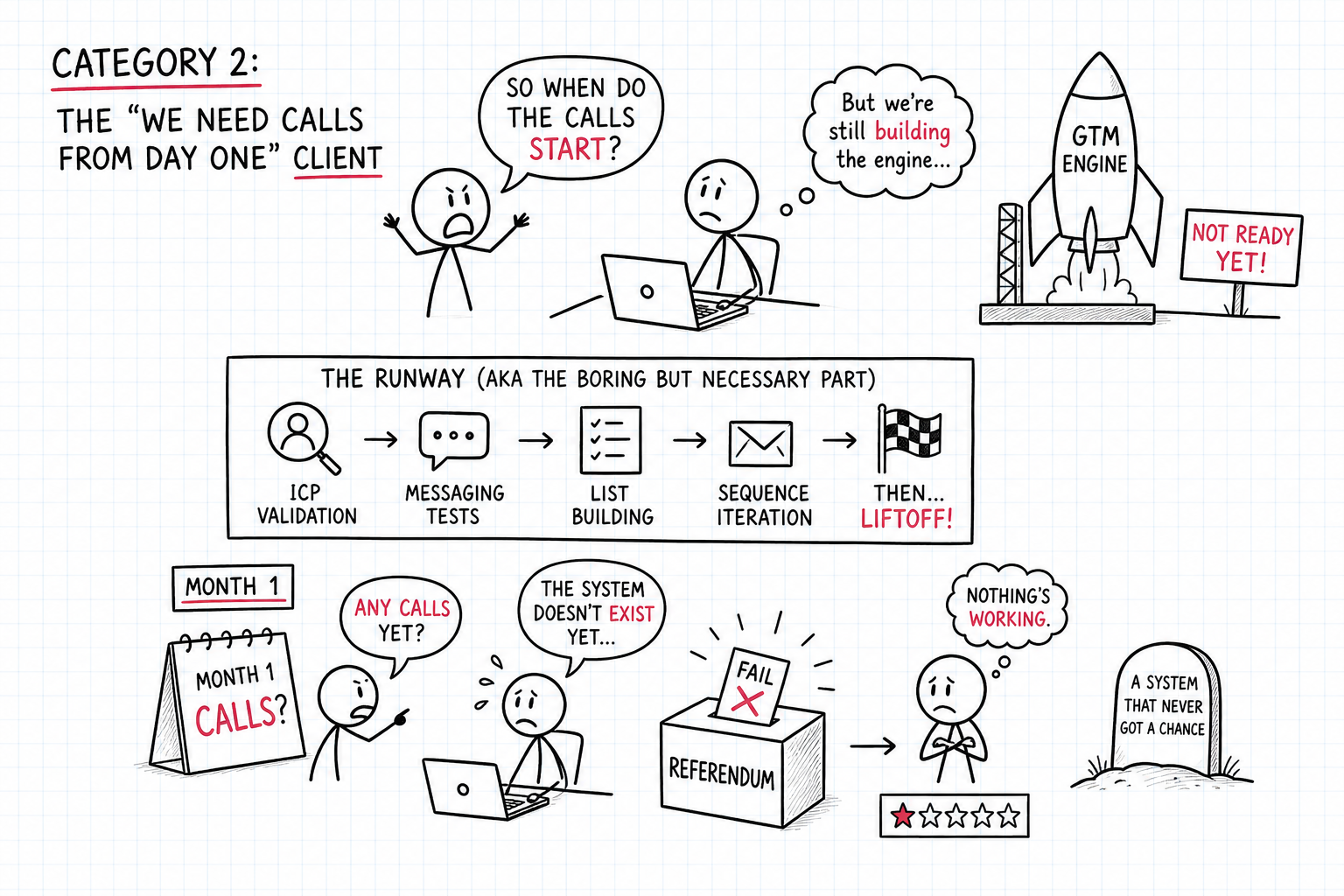
Category 2: The "we need calls from day one" Client

Zero patience for the part where the system actually gets built.

Every real GTM engine has a runway before liftoff. ICP validation, messaging tests, list building, sequence iteration. I onboarded a client once who skipped straight to "so when do the calls start." Month one became a referendum on a system that hadn't been given a chance to exist yet.
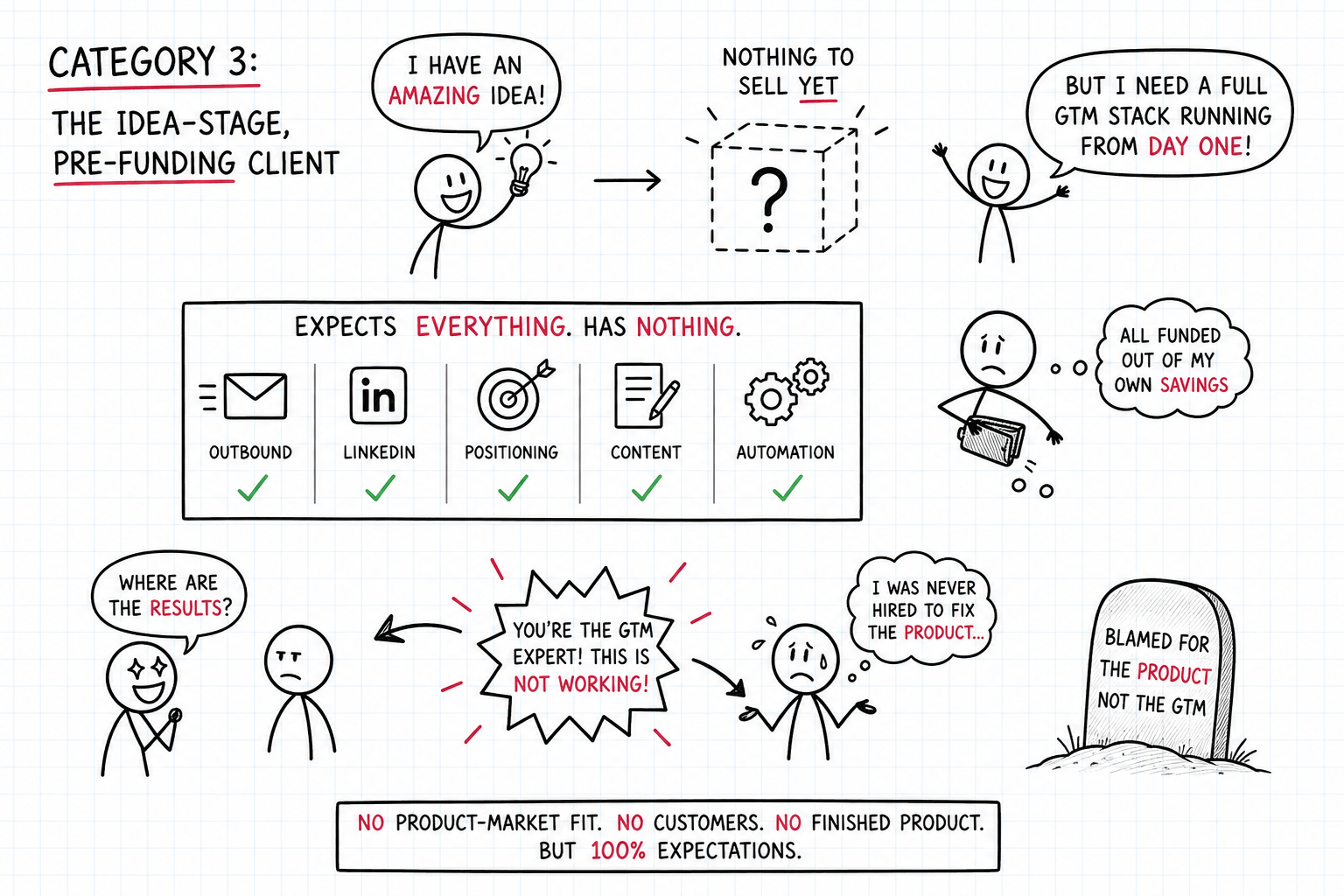
Category 3: The idea-stage pre-funding client

Nothing to sell yet, but a full GTM stack expected anyway.

No product-market fit. No customer base to learn from. Sometimes no finished product. I've had someone at this stage want outbound, LinkedIn, positioning, all running in parallel, funded out of his own savings. You will get blamed for the thing you were never hired to fix: the product itself.
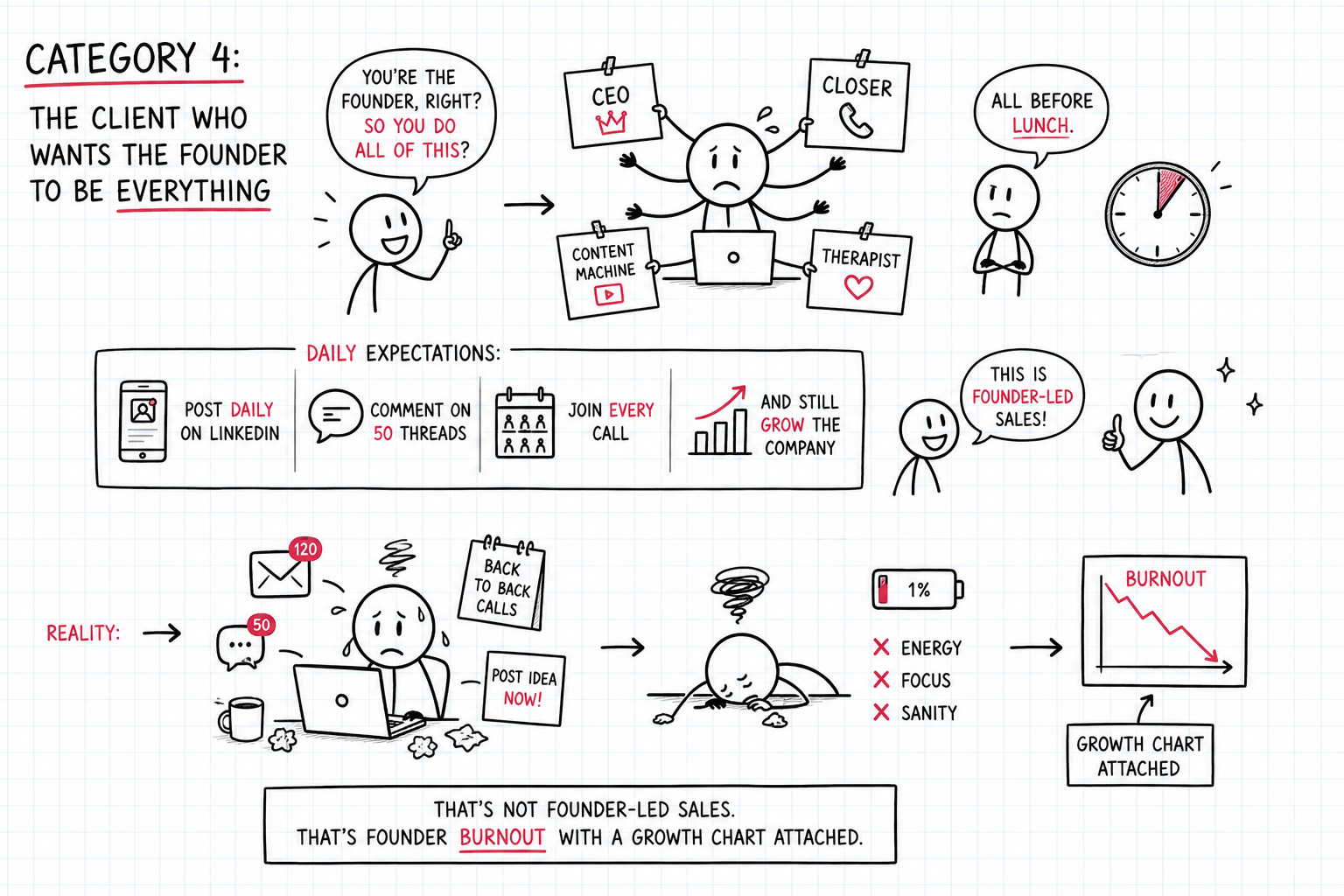
Category 4: The client who wants the founder to be everything

CEO, closer, content machine, and therapist. All before lunch.

Some engagements quietly expect the founder to post daily, comment on fifty threads, join every call, and somehow still run the company. That's not founder-led sales. That's founder burnout with a growth chart attached.
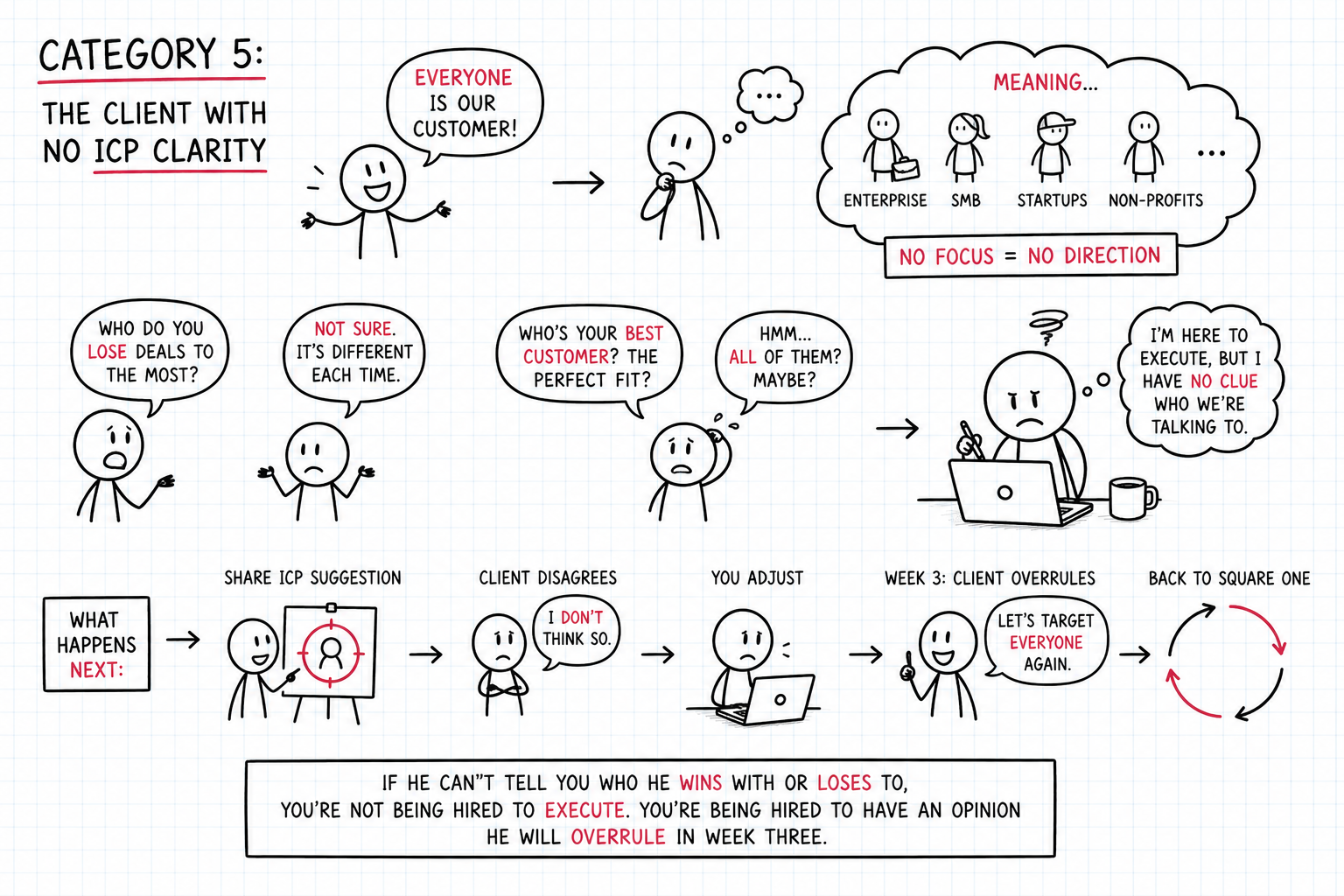
Category 5: The client with no ICP clarity

"Everyone is our customer" is not a strategy. It's a confession.

If a founder can't tell you who he loses deals to, or who his best customer actually looks like, you are not being hired to execute a GTM motion. You are being hired to have an opinion he will overrule in week three.
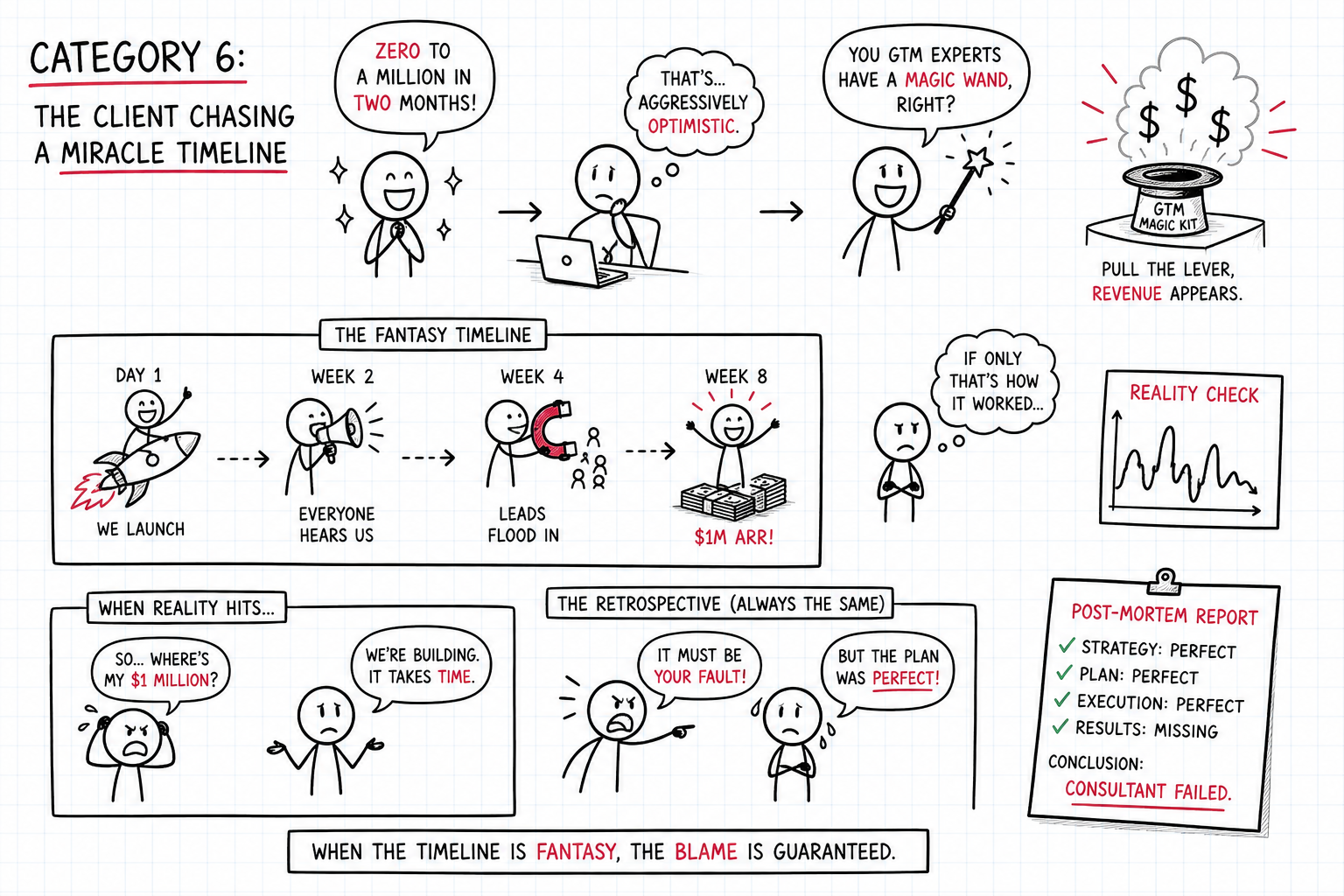
Category 6: The client chasing a miracle timeline

Zero to a million in two months, because apparently we own a magic wand.

I once had a client convinced that GTM consultants keep a secret lever somewhere. Pull it, revenue appears. When the timeline is fantasy, the retrospective is always the same: it must be your fault, because the plan was flawless.
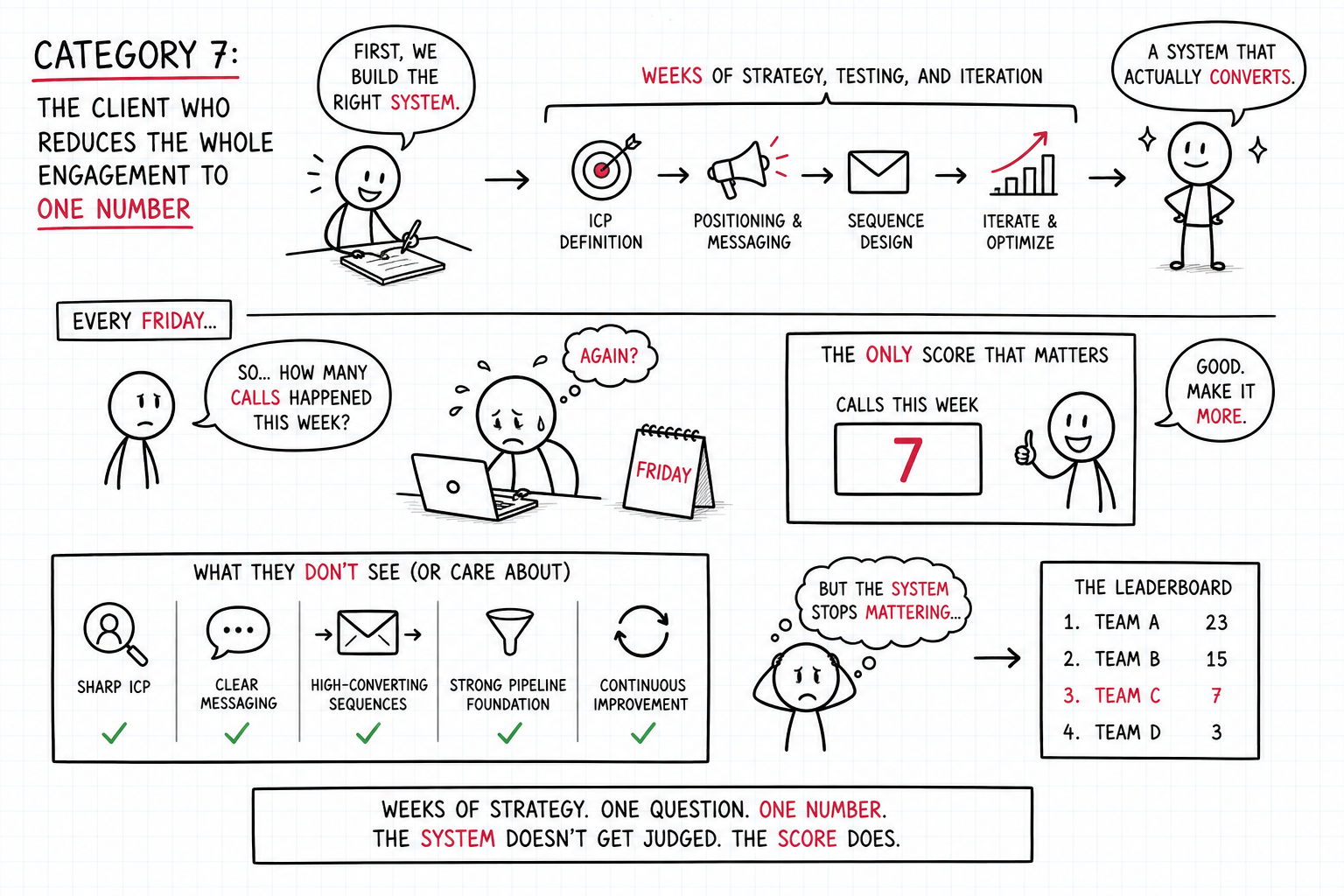
Category 7: The client who reduces the whole engagement to one number

Weeks of positioning work, collapsed into "how many calls happened this week."

You can build the sharpest ICP, the cleanest messaging, a sequence that actually converts, and it still gets flattened into one question every Friday. The system stops mattering. Only the leaderboard does.

And the one I say out loud on every discovery call now

We are not your SDR team. We never will be.

We build the system. We don't sit in a chair and dial all day. If the expectation is a warm body doing outreach at agency day rates, that's a different vendor, and a different conversation.

Every one of these clients looked fine on the first call. That's the actual lesson here, not the checklist. The people worth working with reveal themselves in what they ask for in week one, not in how well they pitch themselves in the first thirty minutes.

So here's the real question I've started asking before any proposal goes out.

What is this founder optimizing for: a system, or a number he can screenshot?

Frequently Ask Questions: Quick Answers to the Real Questions

Does sales psychology still work on sophisticated B2B buyers?
Sophisticated buyers are still human, but the evidence bar is higher and the decision usually involves several stakeholders. Psychology does not replace a strong product or sound economics. It helps those things get noticed and acted on.
Do these frameworks ever conflict with each other?
Occasionally. Loss aversion pushes toward urgency while pre-suasion asks you to slow down and set the frame first. When they pull against each other, the moment in the deal decides which one leads.
What if our category has no obvious villain?
Then do not invent one. The villain works only when the buyer already feels the friction. If nothing qualifies, lead with Jobs To Be Done instead and let the problem define itself.
How do you know whether a framework is actually working?
Measure the moment, not the deal. Attention frameworks should change reply and read rates. Framing should change how often a business case gets built. If nothing moves at that stage, the diagnosis was wrong.
Do these apply to inbound as much as outbound?
Yes, and often more cleanly. An inbound reader has already signalled interest, so attention is half won and the work shifts to relevance, proof and the reason to act now.
Are there well-known frameworks you deliberately left out?
Several, including anchoring, the endowment effect and commitment escalation. They are real, but they are easier to misuse in B2B and harder to apply without drifting into pressure tactics.
About the author
Sachin Jha
Founder & CEO, ONEGTMLAB | Engineering GTM for Technical Founders
Sachin has built GTM systems for 47+ technical founders across cybersecurity, DevOps, and developer infrastructure. He writes about GTM Engineering, AI-powered outbound, and what it actually takes to build a predictable pipeline at early-stage B2B SaaS companies.

Frequently Asked Questions

What is GTM Engineering?

Traditional marketing runs campaigns. GTM Engineering builds the infrastructure that makes campaigns measurable, repeatable, and scalable.

How is it different from traditional marketing?

Traditional marketing runs campaigns. GTM Engineering builds the infrastructure that makes campaigns measurable, repeatable, and scalable.

Who needs GTM Engineering?

Traditional marketing runs campaigns. GTM Engineering builds the infrastructure that makes campaigns measurable, repeatable, and scalable.

What problems does it solve?

Traditional marketing runs campaigns. GTM Engineering builds the infrastructure that makes campaigns measurable, repeatable, and scalable.

What tools are typically involved?

Traditional marketing runs campaigns. GTM Engineering builds the infrastructure that makes campaigns measurable, repeatable, and scalable.

Subscribe To ONEGTMLAB Weekly

Your weekly dose of GTM sanity. Frameworks, signals, and strategies that actually move revenue.
Thank you! Your submission has been received!
Oops! Something went wrong while submitting the form.